[Ushiba, Smith, Tanaka, Fujimoto, Saito]
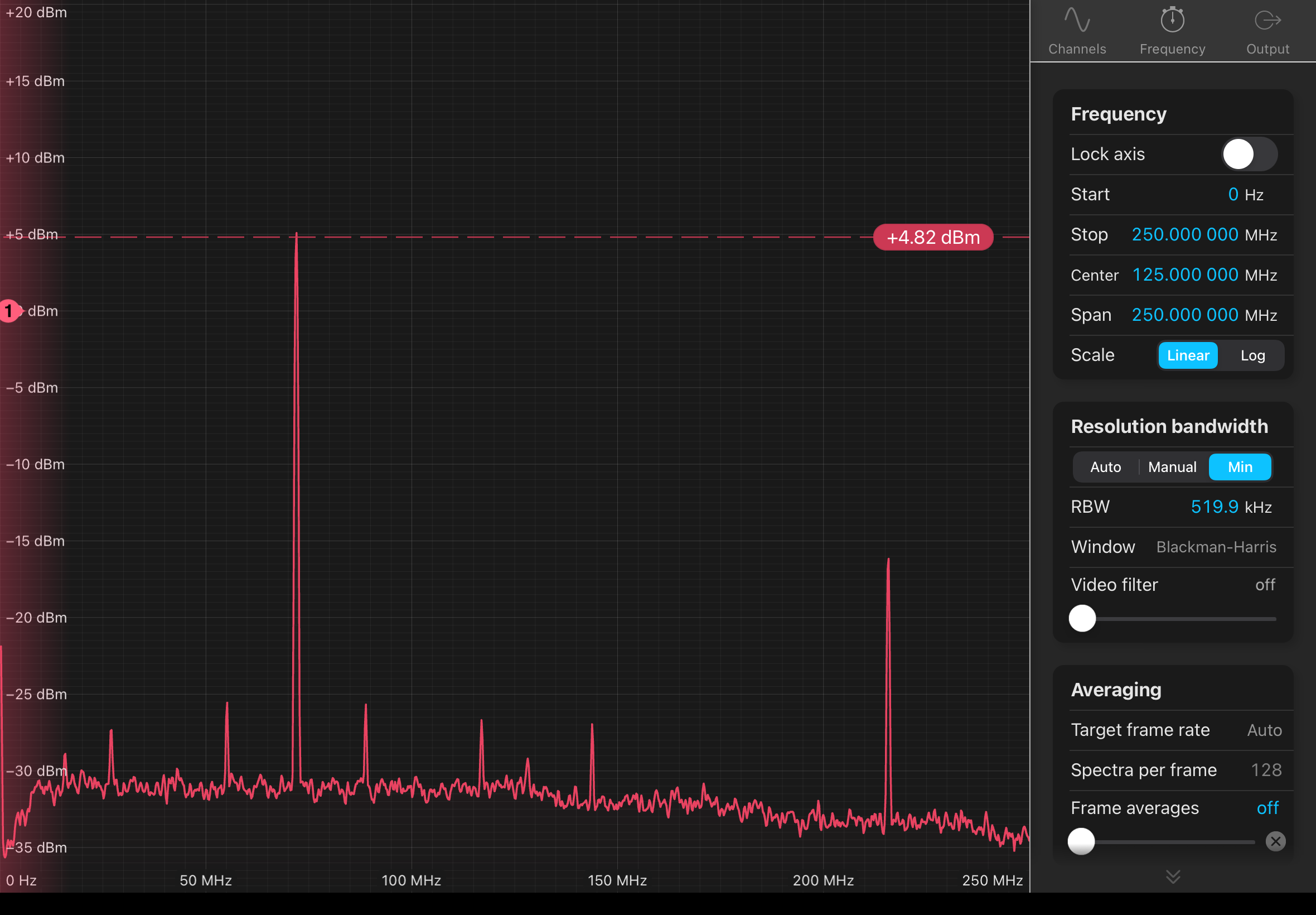
First, the appearance of the sub-laser beam on the OMC REFL camera was examined under the single-pass condition. The mode shape appeared elongated in the horizontal direction. Next, to avoid saturating the OMC REFL PD with the main-laser light, the PD gain was reduced from 40 dB to 0 dB. The PD output was connected to an SR560, which was configured as an AC-coupled second-order high-pass filter with a cutoff frequency of 300 Hz and a gain of 100. When the sub-laser PZT was driven with an 8 Vpp, 500 Hz triangular wave, the noise from the main laser and the amplitude of the sub-laser fringes were comparable, making it difficult to distinguish the fringes. However, when the ISS was turned on, the noise from the main laser was reduced, and by lowering the PZT drive frequency to 170 Hz, the sub-laser fringes became clearly visible. Therefore, it appears feasible to scan the SRY. Next, the ND filter in the sub-laser path of the PLL setup was changed from OD = 0.5 to OD = 0.6. After realigning the PLL path to maximize the beat signal, the beat signal amplitude reached approximately 4.82 dBm. When the LO frequency was tuned to the beat frequency, the PLL successfully locked. Furthermore, when the LO frequency was varied, the beat frequency followed accordingly, confirming that the lock was functioning. However, even while locked, the beat frequency sometimes drifted spontaneously by several MHz. Therefore, the loop filter parameters will need to be adjusted to suppress this motion, and the open-loop transfer function will also be measured. In addition, a piezo driver will be introduced to drive the PZT over a wider frequency range.
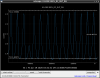
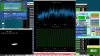
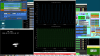
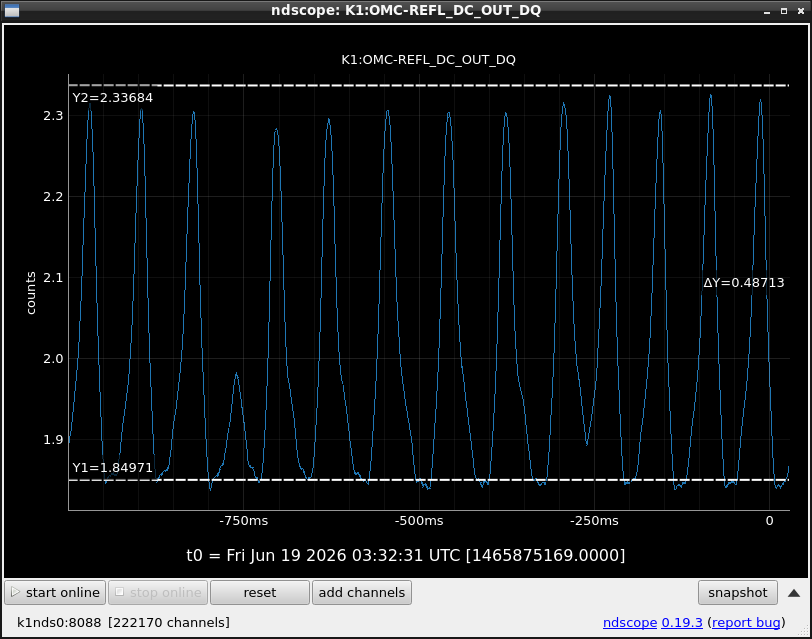
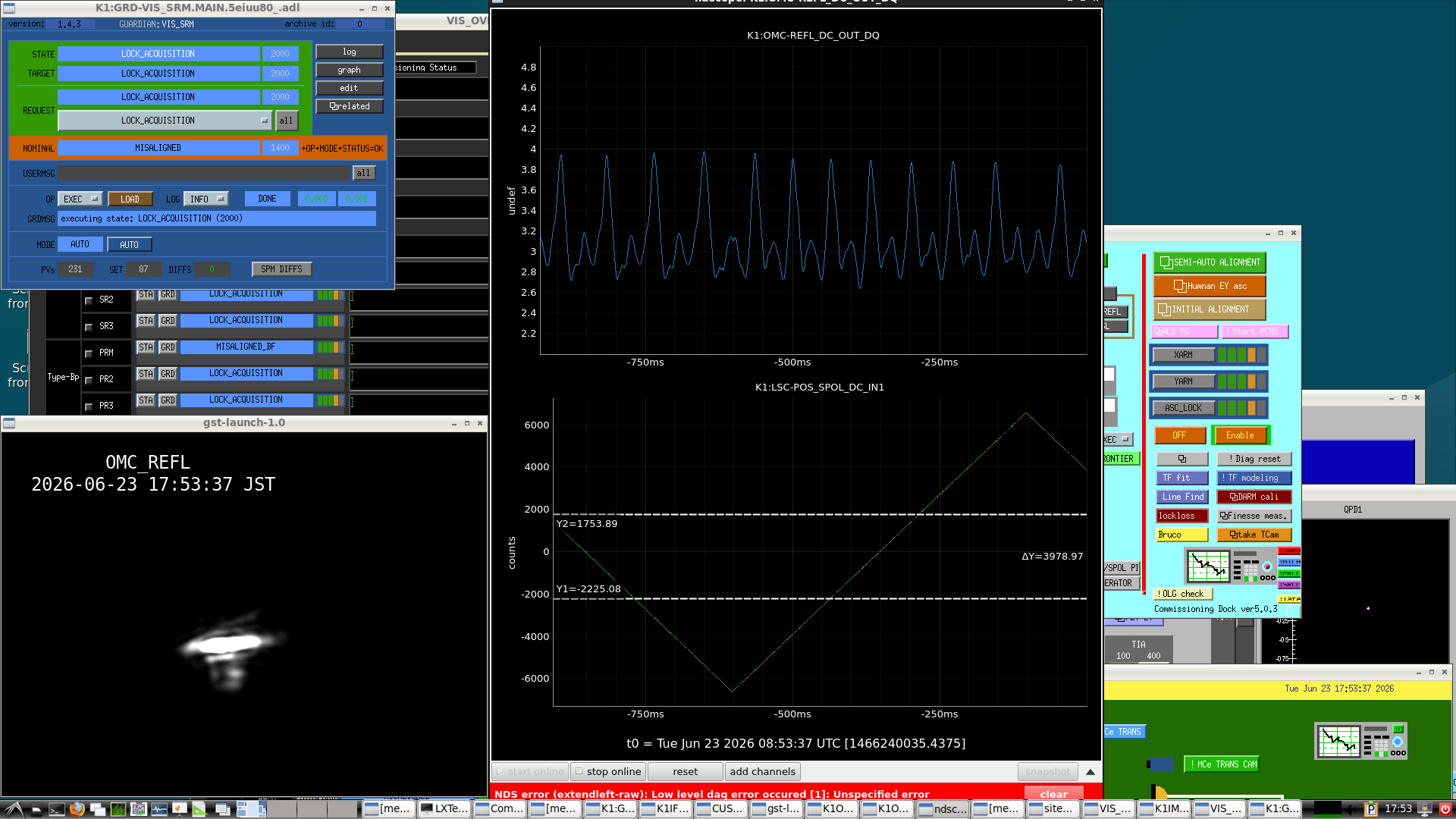
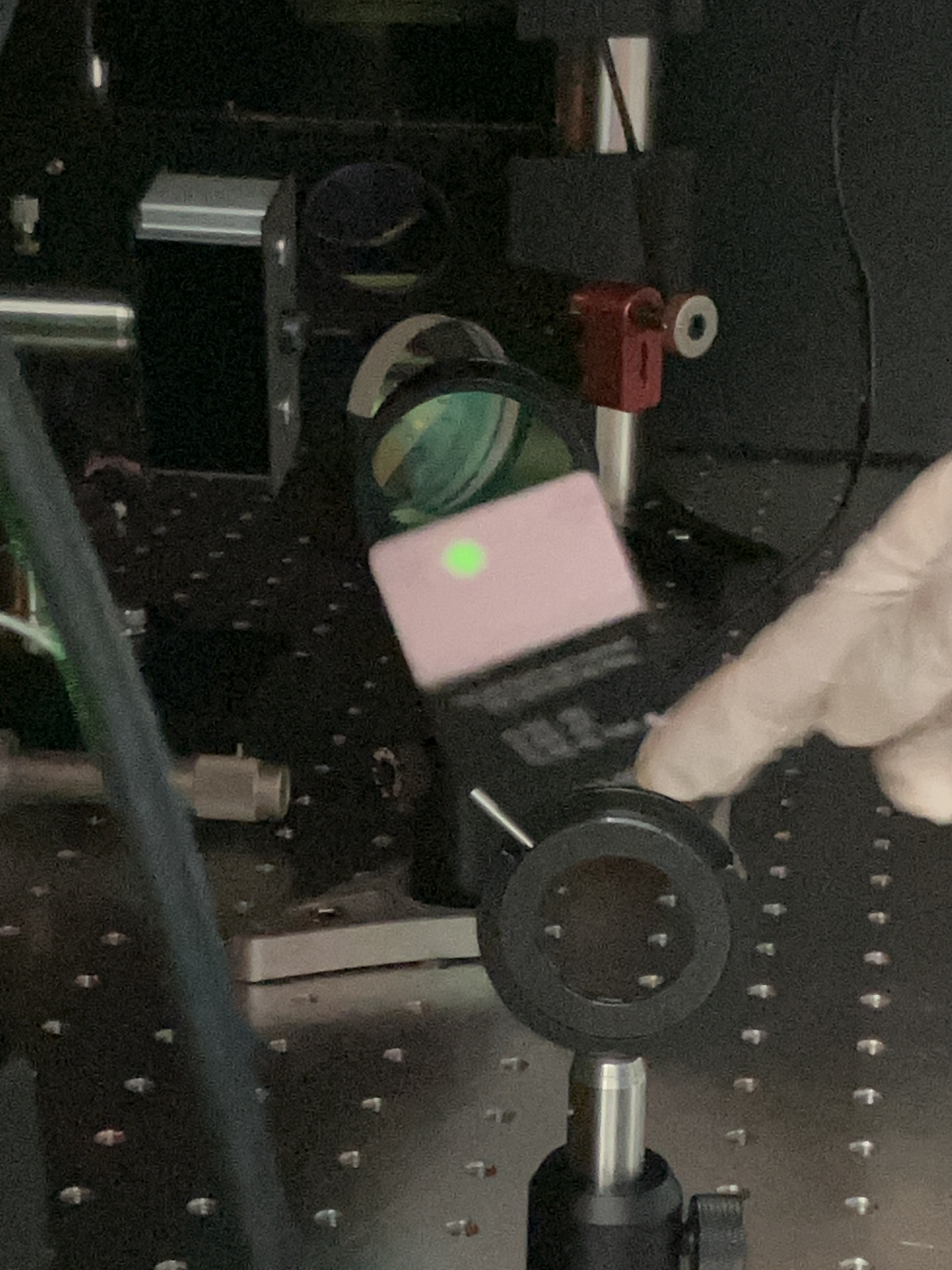
- First, the main laser was turned off and the SRM was misaligned to observe how the sub-laser beam appeared on the OMC REFL camera in the single-pass configuration. The mode shape appeared horizontally elongated (Fig. 1). This is likely because the beam was hitting the lower part of a lens that had originally been installed in the optical path. Next, when the SRM was aligned, the fringe amplitude was approximately 2 μW (Fig. 2). Since this was comparable to the result obtained previously (klog:37116), the alignment of the sub-laser was not further adjusted.
-
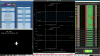
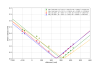
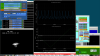
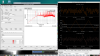
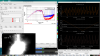
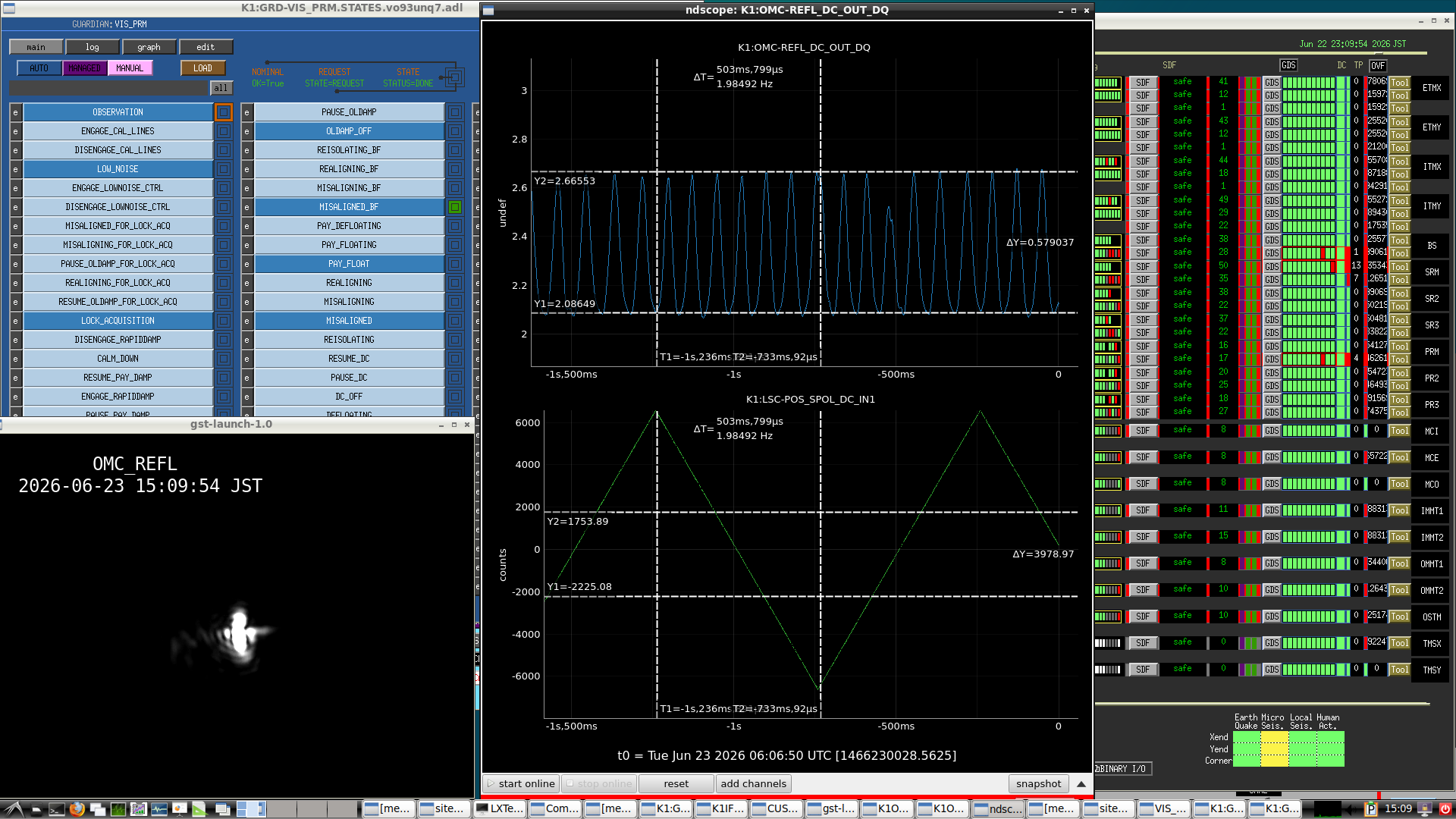
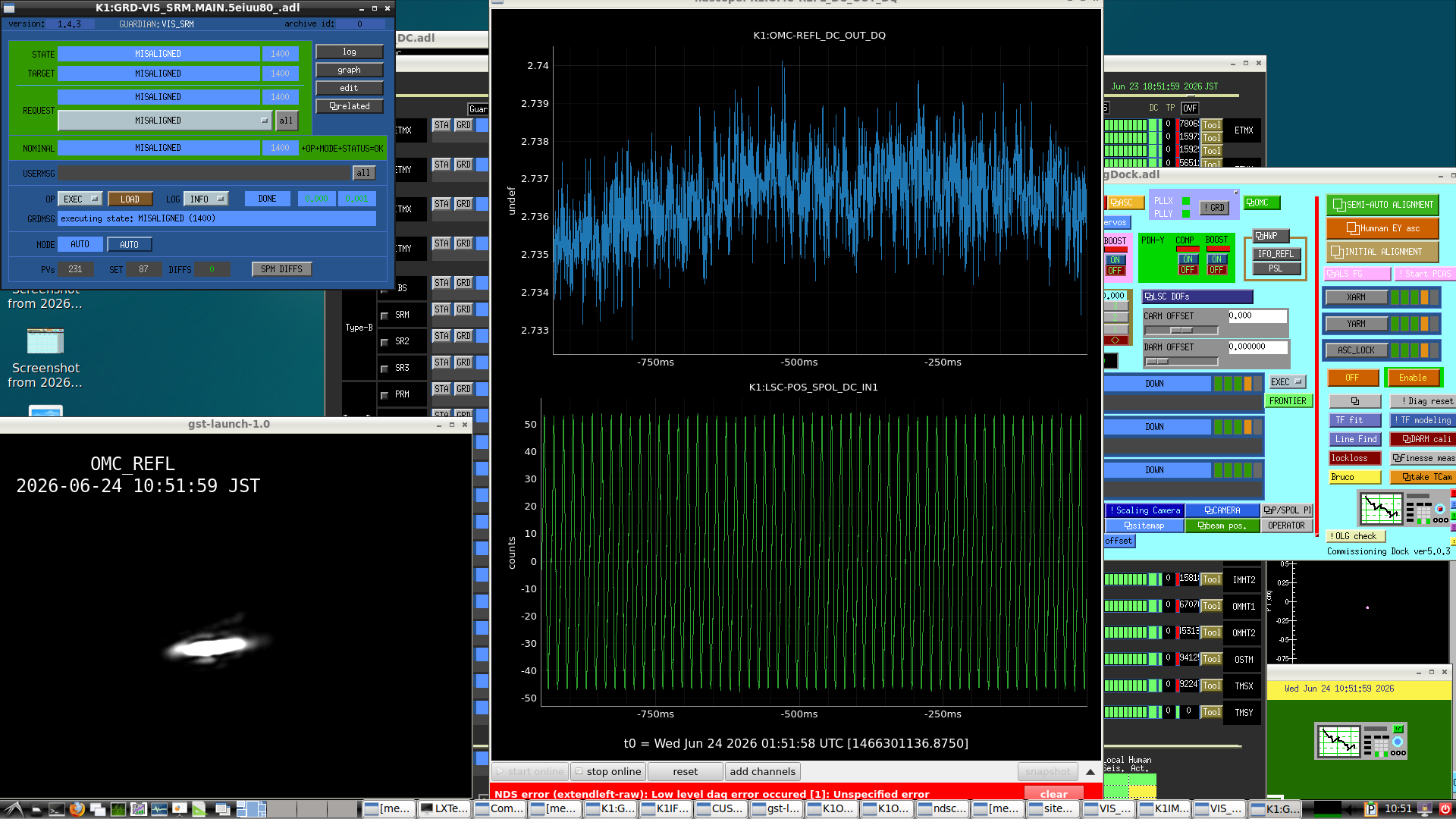
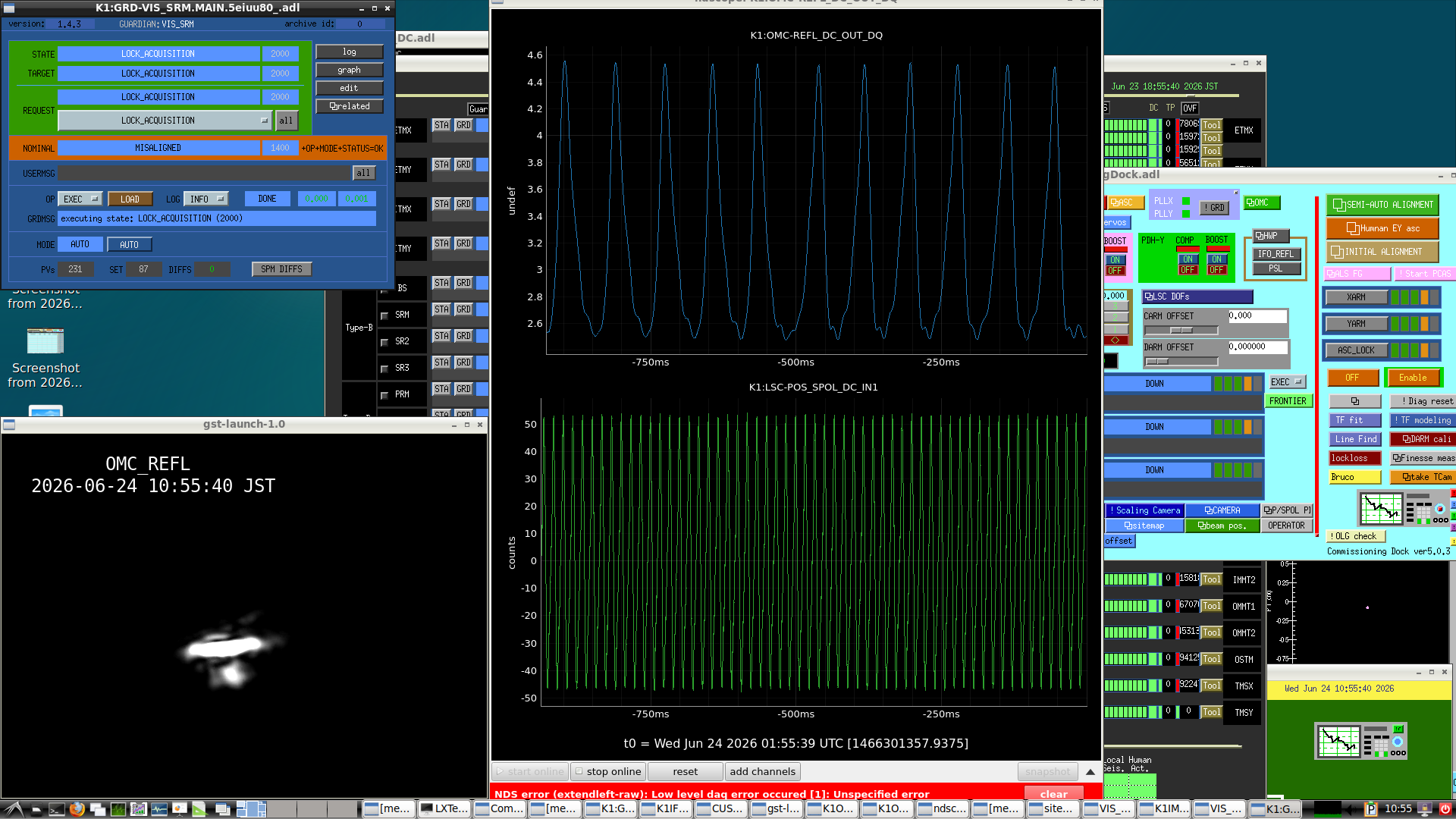
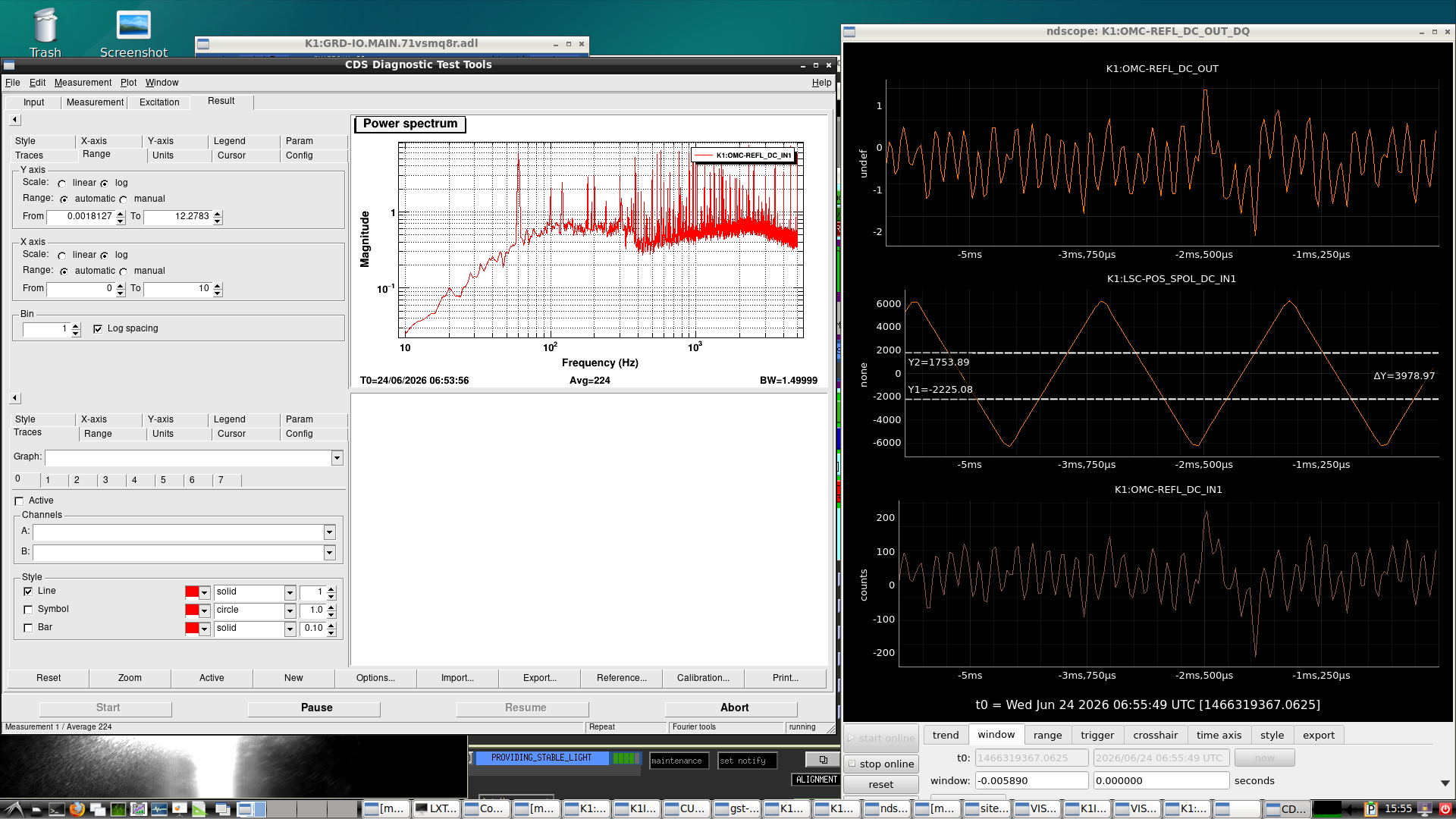
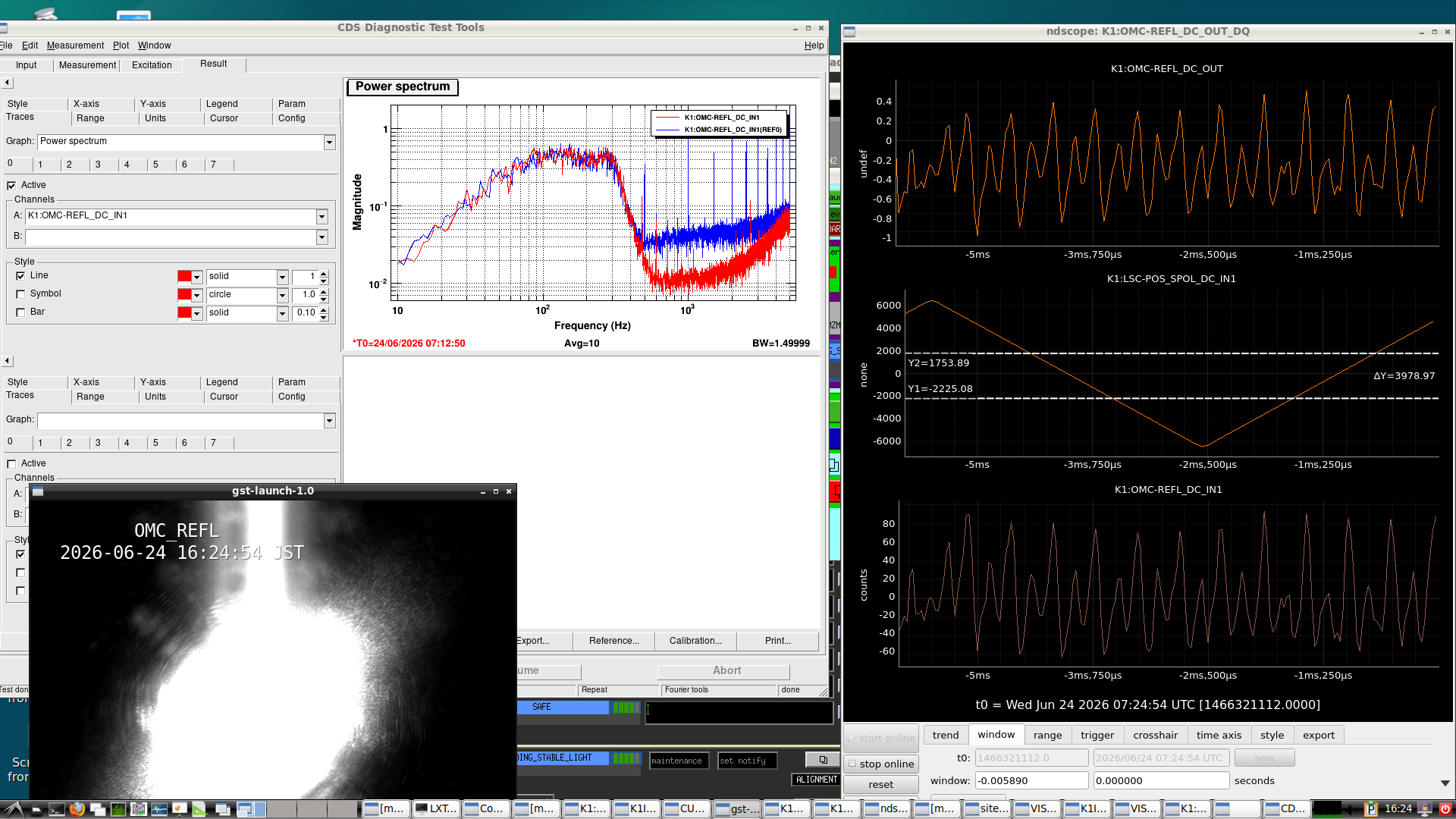
Next, the main-laser power measured at the OMC REFL PD under the single-pass condition was approximately 1.95 mW, while it increased to approximately 6 mW when the SRM was aligned. To avoid saturating the OMC REFL PD with the main-laser light, the PD gain was reduced from 40 dB to 0 dB. Under this condition, when the main laser was resonant in the SRY, the PD output was approximately 3600 counts, corresponding to approximately 2.1 V, allowing the PD output to be connected directly to the SR560. The SR560 was configured in AC-coupled mode, and the cutoff frequency of the high-pass filter was chosen while observing the OMC REFL PD signal with only the main laser present so as to minimize signal fluctuations. The gain was then increased while ensuring that the SR560 did not overload. Next, only the sub-laser beam was injected and it was confirmed that fringes could be observed when the sub-laser PZT was driven. The main-laser beam was then reintroduced. With the SR560 configured as a second-order high-pass filter with a cutoff frequency of 300 Hz and a gain of 100, and with the sub-laser PZT driven by an 8 Vpp, 500 Hz triangular wave, the noise from the main laser and the sub-laser fringe amplitude were of comparable magnitude, making fringe identification difficult (Fig. 3). However, after turning on the ISS, the noise from the main laser was significantly reduced. Furthermore, by lowering the PZT drive frequency to 170 Hz, the sub-laser fringes became clearly visible (Fig. 4). The power spectra shown in Figs. 3 and 4 correspond to K1:OMC-REFL_DC_IN1. In Fig. 4, the blue trace was taken while the sub-laser PZT was being driven, while the red trace was taken without driving the PZT. Comparing Figs. 3 and 4 clearly shows that the ISS reduced the noise level. Therefore, scanning the SRY appears to be feasible.
-
Next, the optical powers measured immediately before the RFPD in the PLL path were 45.5 μW for the main laser and 2.122 mW for the sub-laser. Since the sub-laser power might have been too high, the ND filter in the sub-laser path was changed from OD = 0.5 to OD = 0.6. The sub-laser power was then remeasured and found to be 1.349 mW. The PLL optical path was then realigned to maximize the beat signal (Fig. 5), resulting in a beat signal amplitude of approximately 4.82 dBm. Using a filter similar to that employed in klog:37052 and setting the LO frequency equal to the beat frequency, the PLL successfully locked. Furthermore, changing the LO frequency caused the beat frequency to follow accordingly, confirming proper PLL operation. Next, an attempt was made to scan the SRY by sweeping the LO frequency. However, clean fringes such as those shown in Fig. 4 were not observed. In addition, even while the PLL was locked, the beat frequency occasionally drifted spontaneously by several MHz, indicating that further adjustment of the loop filter is necessary to stabilize the lock. The open-loop transfer function will also need to be measured. Furthermore, a piezo driver will be introduced in order to drive the PZT over a wider frequency range.