[Tanaka, Fujimoto, Saito]
Following klog:36995, a high-pass filter with a cutoff frequency of approximately 12 MHz was added to suppress the 900 kHz noise originating from the sub-laser. In addition, the beat signal was found to be approximately 10 dB lower than in the previous measurement (klog:37020), although the cause remains unclear. Lock acquisition was then attempted, but no lock was achieved. An RF amplifier was also inserted after the high-pass filter; however, although the beat signal amplitude increased, the signal waveform became distorted.
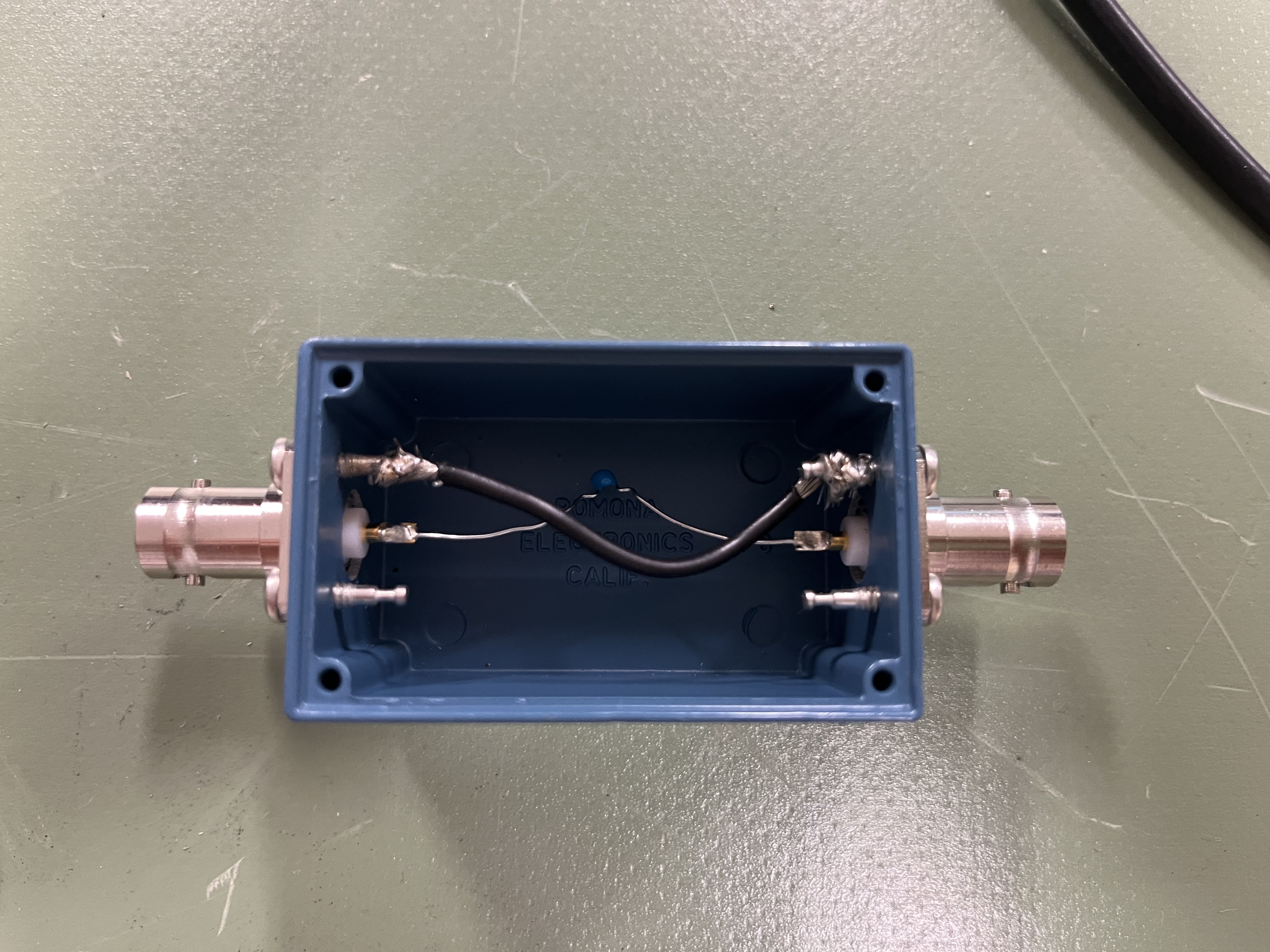
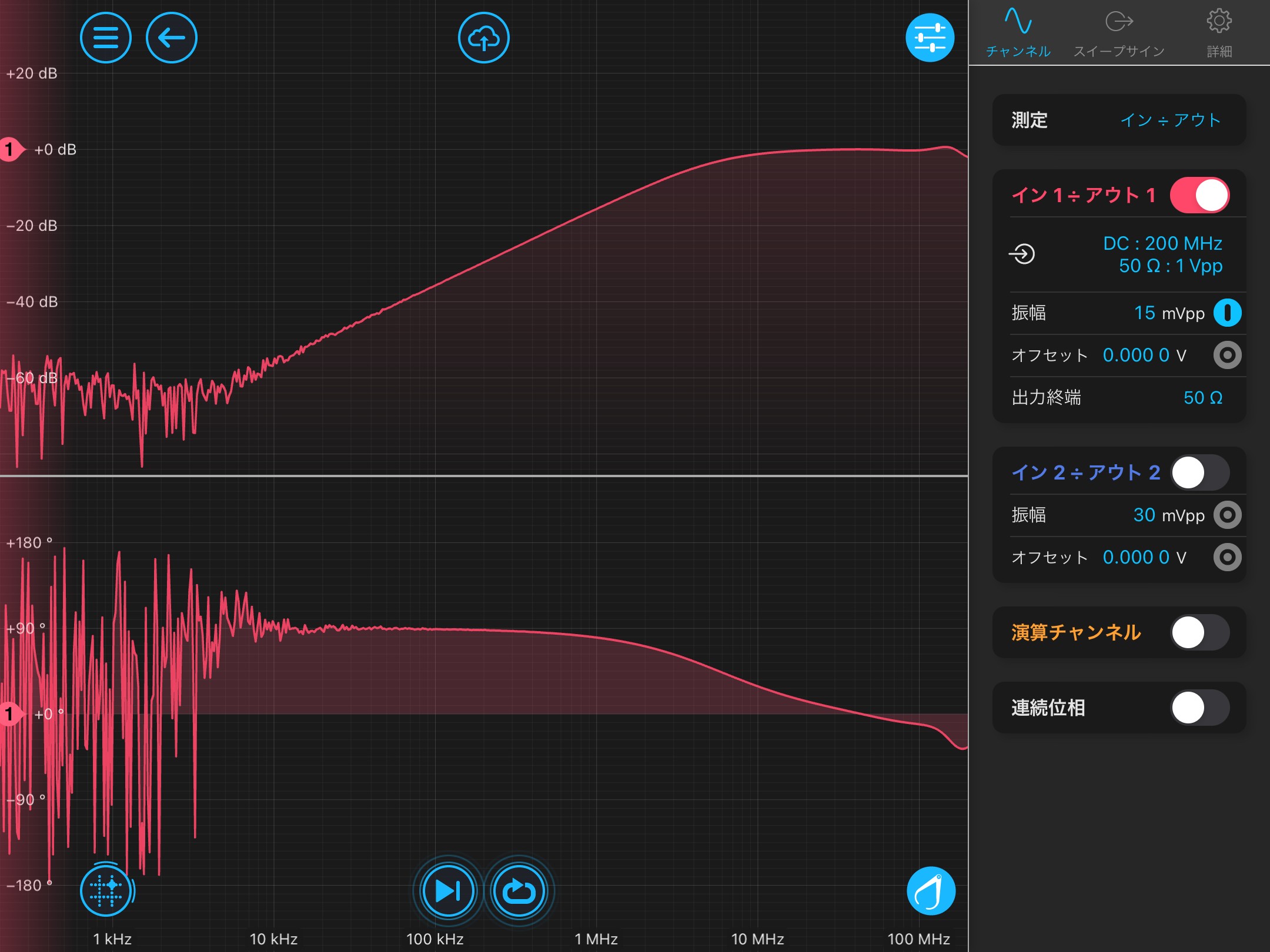
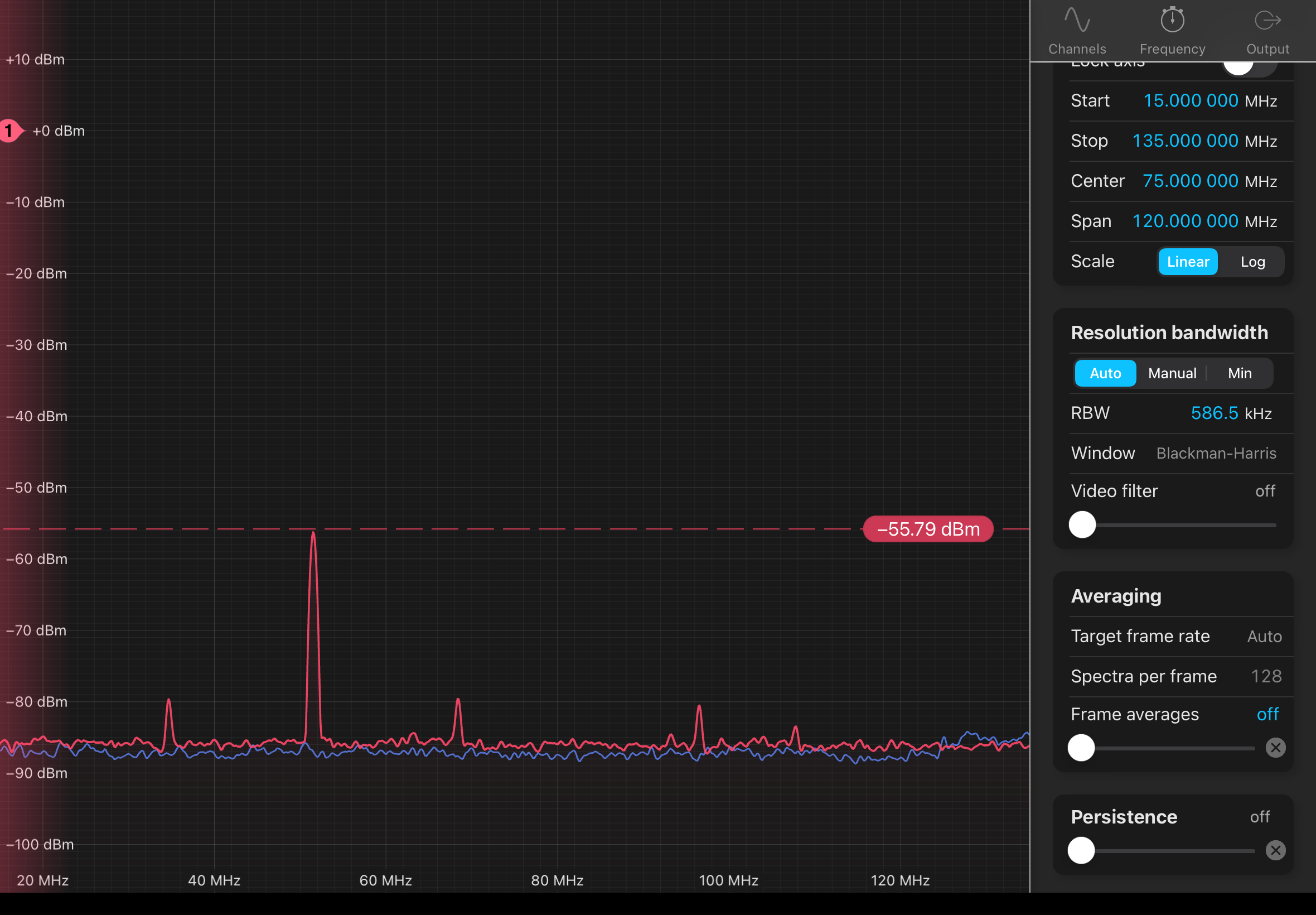
- To suppress the 900 kHz noise from the sub-laser identified in klog:36995, a high-pass filter with a cutoff frequency of approximately 12 MHz was constructed using a 270 pF capacitor (Photo 1). The measured transfer function of the high-pass filter is shown in Photo 2. The high-pass filter was then installed immediately after the output of the RFPD, and the spectra with and without the filter were compared. When the RFPD output was passed through the high-pass filter, the signal level decreased by approximately 20 dBm compared with the unfiltered case (Photo 3). The red trace corresponds to the case without the high-pass filter, the light red trace corresponds to the case with the high-pass filter, and the blue trace corresponds to the measurement with nothing connected. Next, the high-pass filter was tested with the power splitter and mixer used in the PLL setup connected. In this configuration, the signal level decreased by approximately 11 dBm when the high-pass filter was inserted (Photo 4).
- To determine the conversion between dBm and Vpp in the Moku:Lab spectrum analyzer, a signal generated by the function generator of one Moku:Lab was measured using the spectrum analyzer of another Moku:Lab. When a 3 mVpp signal was applied, the measured level was -46.35 dBm. Therefore, the beat signal observed in the previous experiment (klog:37020) corresponds to approximately 3 mVpp.
-
The beat signal was then re-examined and found to be smaller than in the previous measurement (klog:37020). To investigate this, the alignment was readjusted, the RFPD was reinstalled, and the polarization was varied. After reinstalling the RFPD, the DC output became saturated, so the sub-laser power was reduced to 0.825 mW. Ultimately, the beat signal level reached approximately -55 dBm (Photo 5). This is about 10 dB lower than in the previous measurement (klog:37020). The reduction cannot be explained solely by the decrease in sub-laser power, and the cause remains unclear. However, very little fluctuation in the beat signal amplitude was observed.
-
Next, lock acquisition was attempted using Moku:Lab with a 10 kHz low-pass filter while varying the gain and adding an integrator. However, no behavior indicating that the beat frequency was being pulled toward the LO frequency was observed. Lock acquisition was also attempted using the low-pass filter of an SR560 instead of Moku:Lab while varying the gain, but no lock was achieved. In addition, when the sub-laser temperature was lowered from 31.51 ℃, a beat signal was still observed at 29.74 ℃. Based on the absolute frequency measurement reported in klog:36760, this is believed to be due to a mode hop. PLL operation was also tested at this temperature, but lock acquisition was again unsuccessful.
-
Finally, an RF amplifier was inserted after the high-pass filter in an attempt to increase the beat signal amplitude. Although the beat signal became larger, its waveform became significantly distorted (Photo 6). When the mixer was removed, the waveform returned to a clean shape, indicating that the mixer was responsible for the distortion. Therefore, this RF amplifier is not suitable for the present application.