Abstract
We successfully installed the 150kHz notch filter in the path to the PZT in the IMC control loop, and also recovered the UGF of 120kHz for the IMC control loop without resonance at 150kHz.
Background
After replacing the neoLase laser, we could not increase the UGF for the IMC loop as FBL case upto 120kHz because of 150kHz resonance appeared. Ushiba-kun confirmed that the 150kHz resonance existed in the PZT path in the contol loop. A passive 150kHz notch filter was prepared, assuming 50 ohm terminator resistance at the PZT input. However, the present output circuit IC(AD829) for the IMC servo to the PZT can drive only 6mA current, then 50 ohm resistance cannot be directly connected with this notch filter. On the other hand, the actual voltage amplitide to the PZT seemed to be limited within +/- 1.5V because 1/10 attenuator was set at the output in the IMC control servo circuit to the PZT path. Consequently, a current driver amplifier with roughly ~ 30mA driving ability is enough to solve this situation.
Countermeasure
We decided to use SR560 to drive 50 ohm resistance with 150kHz notch because it has a specification to drive 50 ohm resistance with 5V output voltage using its 50 ohm output. According to Shimode-san, OP37 + LM6321 current buffer amp are used in the SR560 for the output circuit. It can drive 300mA according to its specification sheet.
Reforming the PZT path and IMC lock recovery
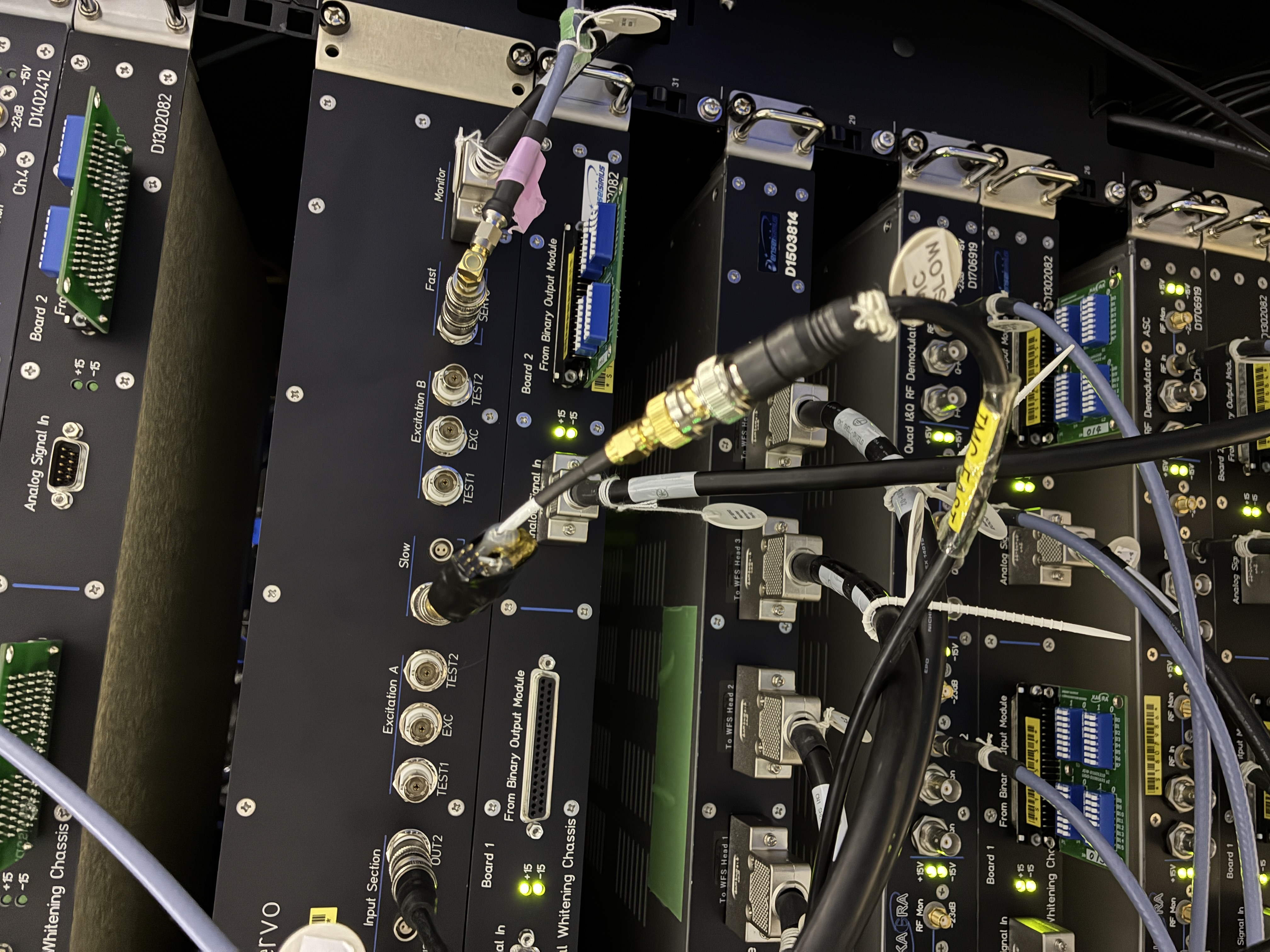
- confirmed that the notch filter was connected at the output of the IMC servo SLOW out (PZT) as photo.1,
- set IMC down (PMC was set resonance),
- disconnnected the BNC cable at the PZT input of the neoLase laser's master laser, then I connected only 2W type 50 ohm terminator,
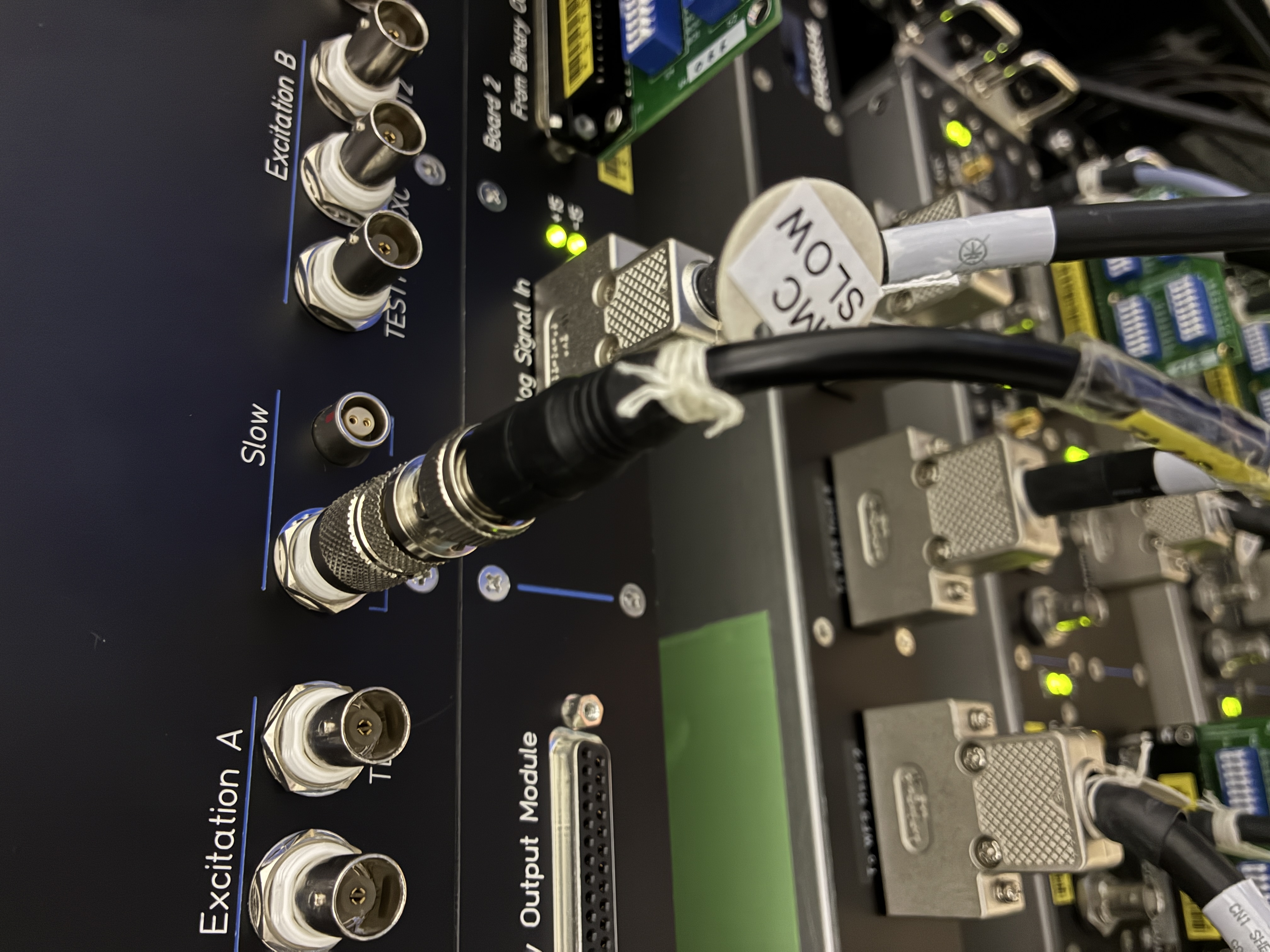
- removed 150kHz notch filter from the IMC srvo slow output (photo.2), and connect it at the 50 ohm terminator input at the master laser side. (photo.3)
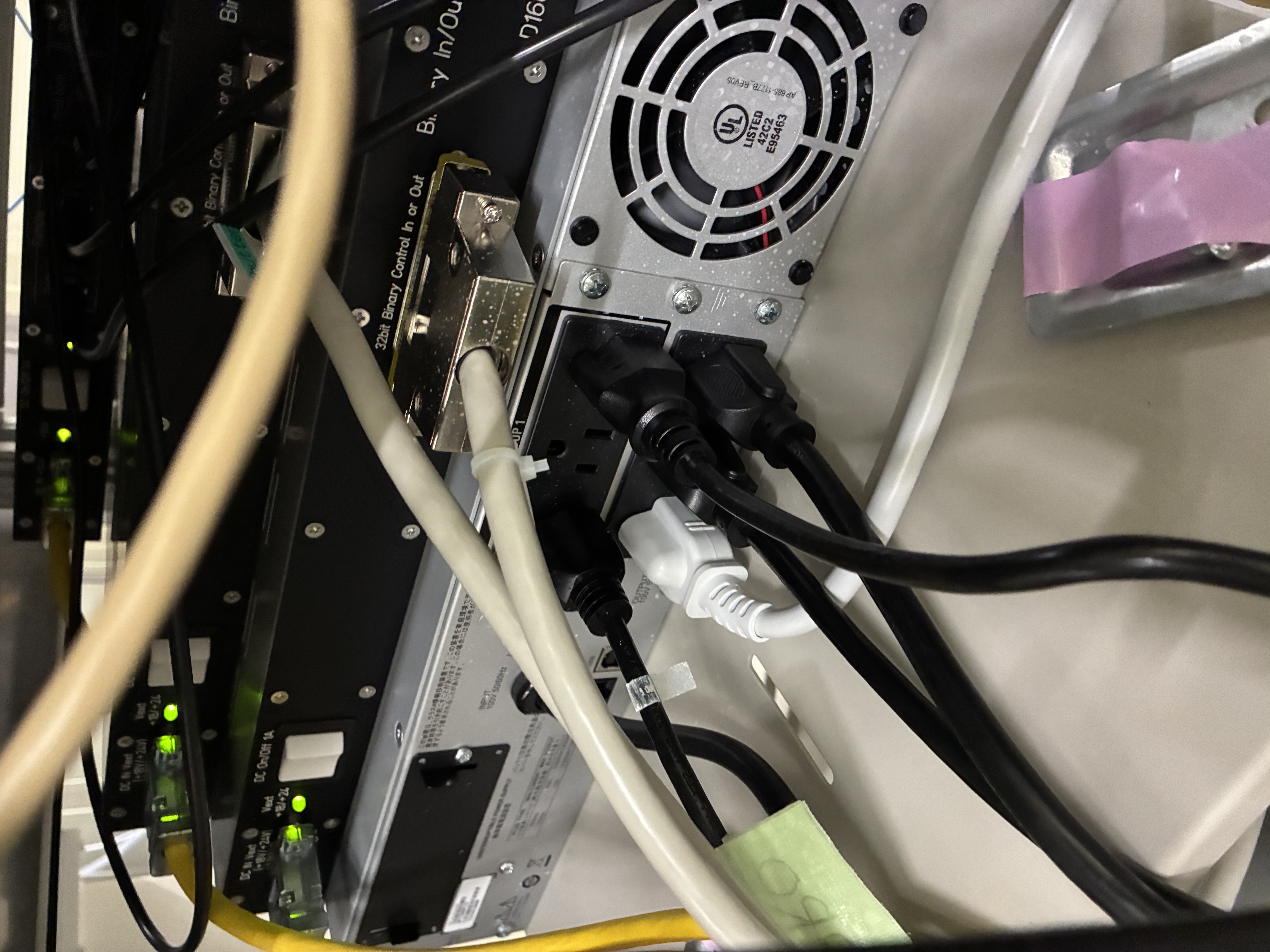
- set SR560 on the 19 inch rack cage that houses neoLase controller and DC voltages (photo.4). The power line of the SR560 was taken from the uninterruptible power supply that was also used for the neoLase amp, etc. (photo.7) set the input status at GND. connect the BNC cable from the IMC control servo at the "B" input in the SR560. The polarity was "non INV". set the gain of 2 to compensate the 1/2 voltage reduction due to 50 ohm output and 50 ohm load condition with the notch filter. set no filter in the SR560.
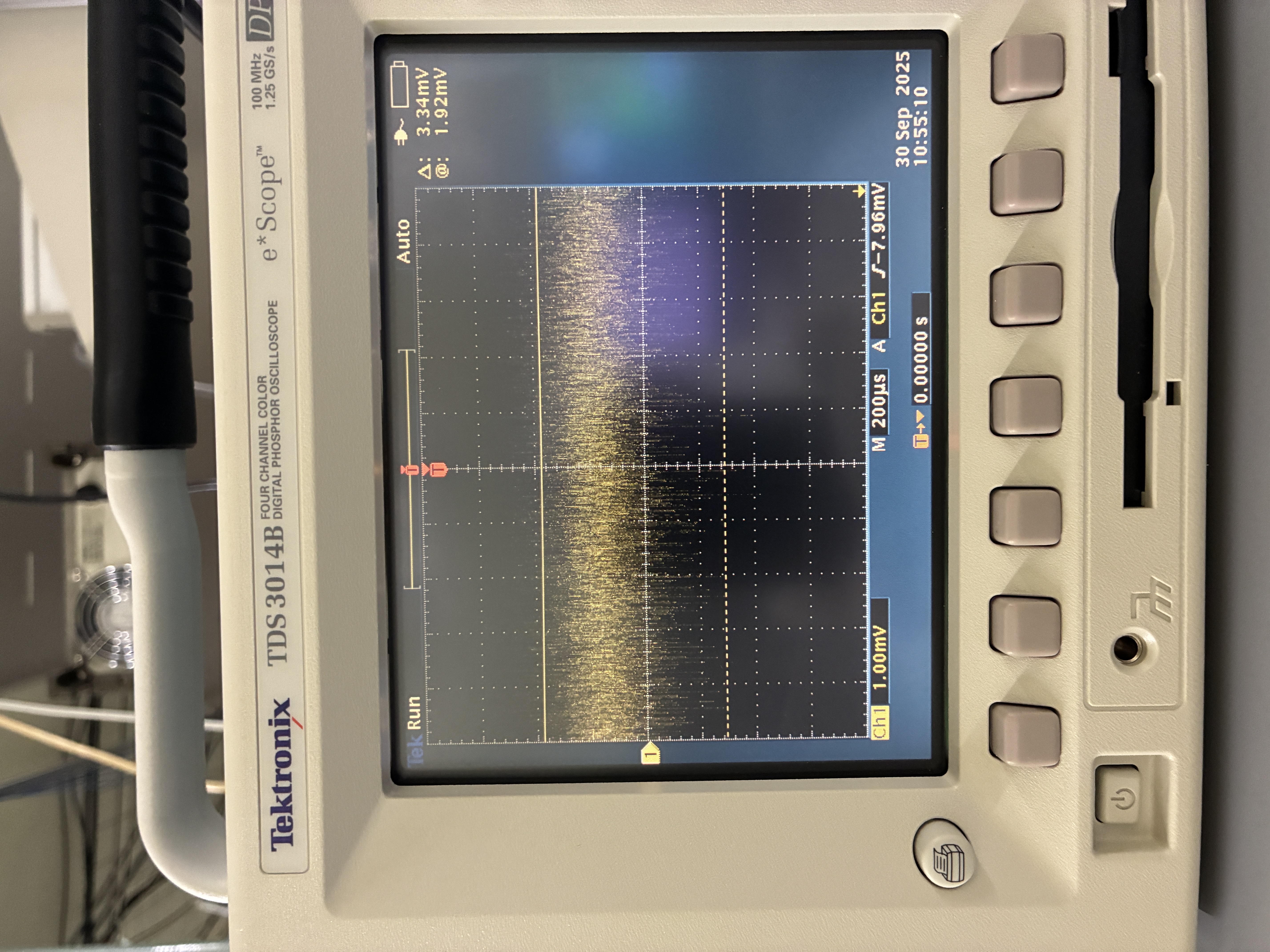
- check the output voltage from the 50 ohm output using oscilloscope. it showed very slight offset at the level of mV. I adjusted it around zero by rotating the offset adjustment resistnace? in the SR560. (photo.5, 6)
- connect a BNC cable between the SR560 50 ohm output and the notch filter. also connecte a BNC cable between 600 ohm output of the SR560 and the oscilloscope to monitor the feedback voltage to the PZT.
- change the input statsus from GND to DC coupling.
- I set "Providing Stable Light" in the IOO guardian. IMC could be locked.
Loop gain, etc, checks
- I checked the RMS amplitude to the PZT. Just after the IMC lock, RMS was ~ 1.5Vp-p. After ~ 20 minutes or so, it became smaller to the level of 0.5Vp-p or so, maybe because I exited from the PSL room and no air turbulace was generated.
- To measure the transfer function of the IMC control loop, I rearranged cables to measure it by using Moku. Ushiba-kun confiemed that the 150kHz bump disappered in the TF.
- We tried to increase the UGF for the IMC control. Although 140kHz was realized, the phase margin became ~ 27 degrees or so. We decide to keep the same UGF of 120kHz as before with the phase margin of > ~ 40 degrees. (Becasue of troubles, TF data was lost. We will measure later again.)
Additional Note
I change the target temp of the precision cooler for the PSL from 21.1C to 19.1C only during activities in the PSL room to mitigate the temp changes inside the PSL room.