[Kimura, Yasui, R. Takahashi, M. Takahashi and H. Sawada]
Test period: 2026/04/20~2026/04/21
A vacuum leak test was conducted on the SRM.
A leak of approximately 1×10⁻⁹ Pa·m³/s was detected at the side flange on the +X side of the SRM.
On the other hand, the results of the SRM build-up test showed a rate in the range of 1×10⁻⁴ Pa·m³/s.
Since the difference in leakage rate was significant, a leak test was conducted by blowing helium gas onto all flanges installed on the SRM; however, no new leak points were found other than the side flange.
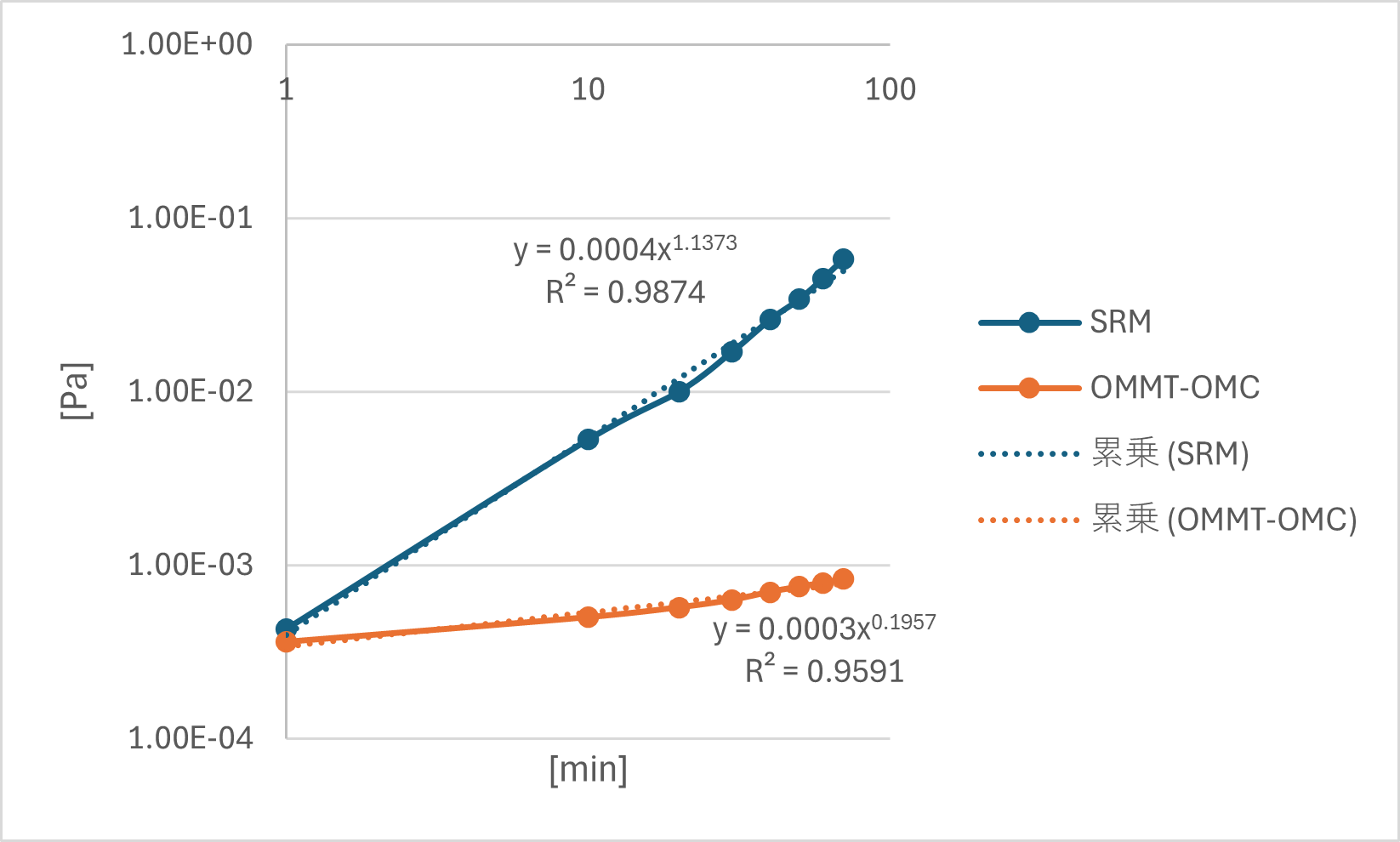
For reference, a plot of the pressure rise during the build-up test is attached.
Based on the slopes of the straight lines on the double-logarithmic graph (SRM ~ 1, OMMT ~ 0.2), it was determined that the pressure rise in the SRM was due to a leak, while that in the OMMT was due to outgassing.
The build-up value for the OMMT was in the range of 1×10⁻⁷ Pa·m³/s.

[Kimura, M.Takahashi, H. Sawada, R. Takahashi and Tomaru]
On April 22, we continued conducting leak tests on the SRM vacuum vessel.
Since vacuum leaks were suspected due to cracks in the weld lines,
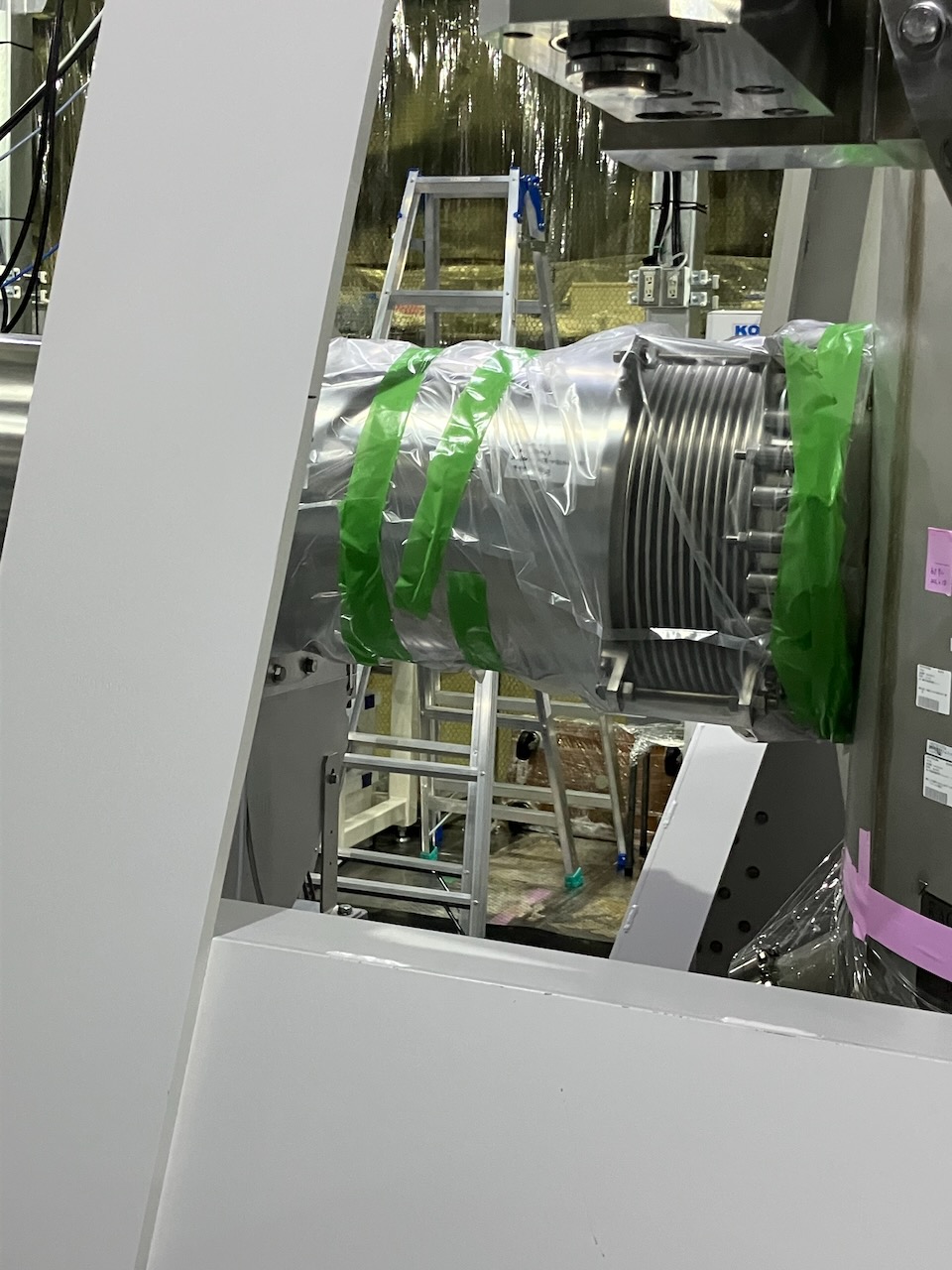
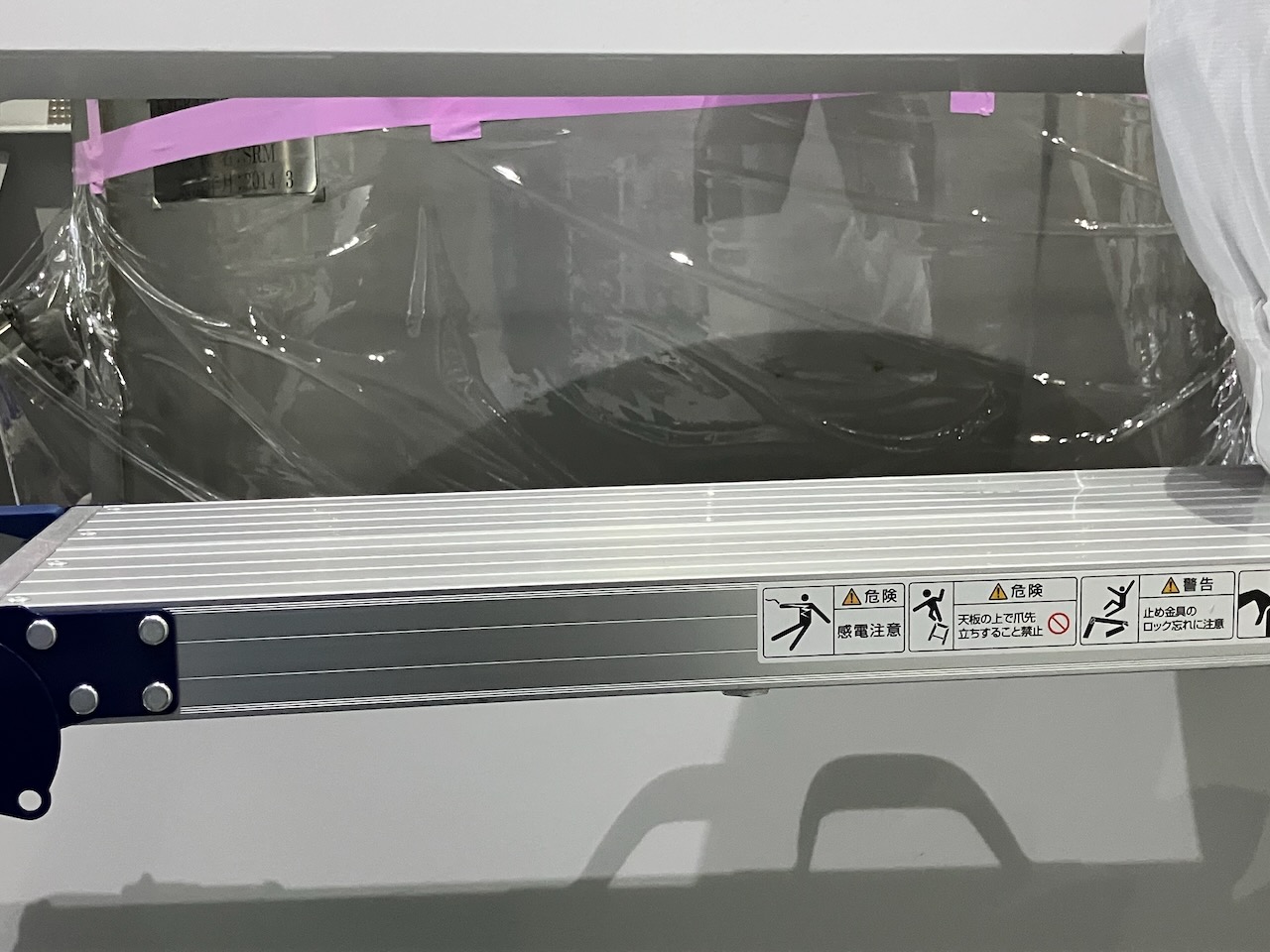
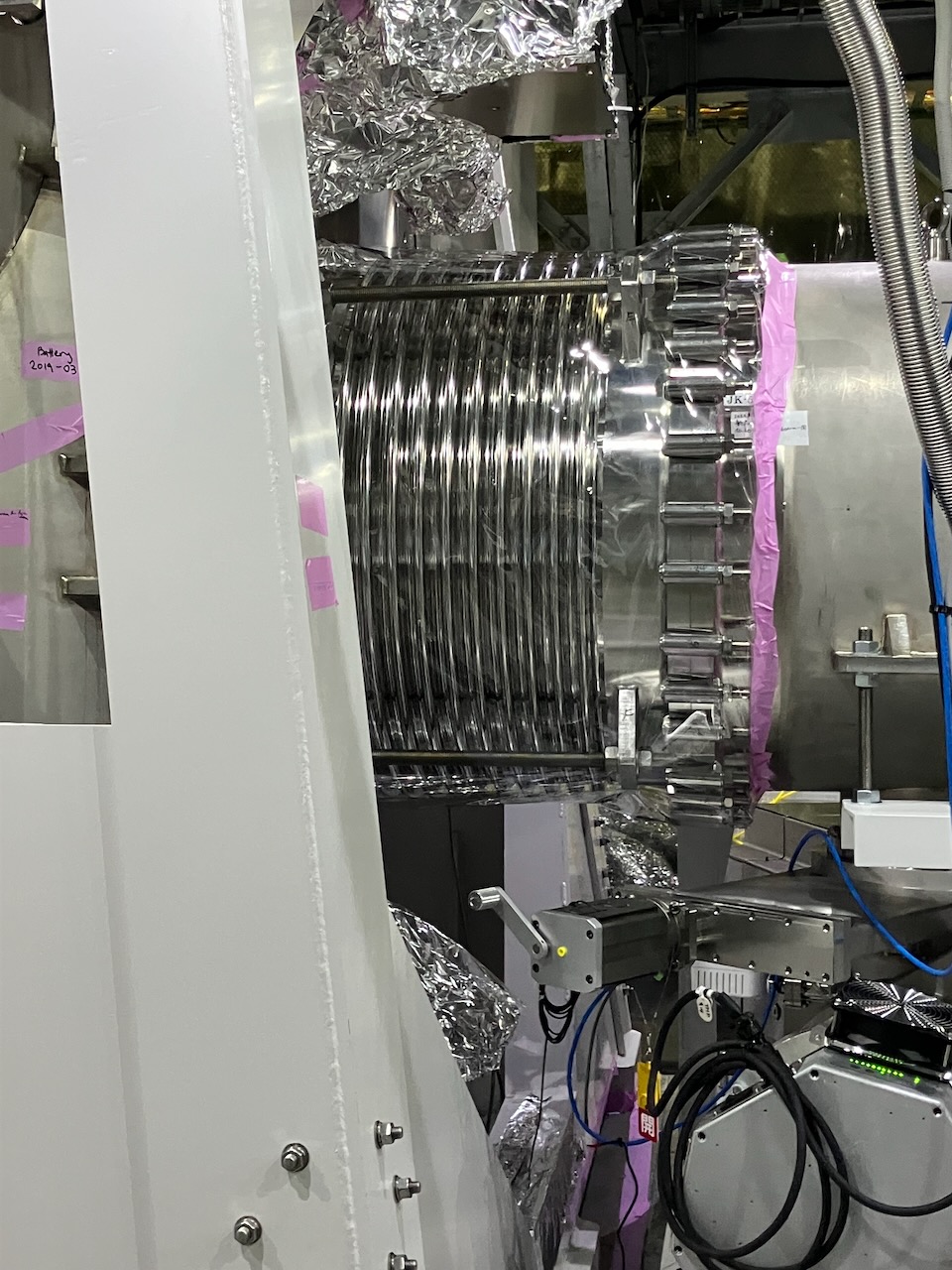
we performed leak tests by blowing helium gas onto the weld lines and using the hood method; however,we were unable to locate the leak. (See attached photo.)
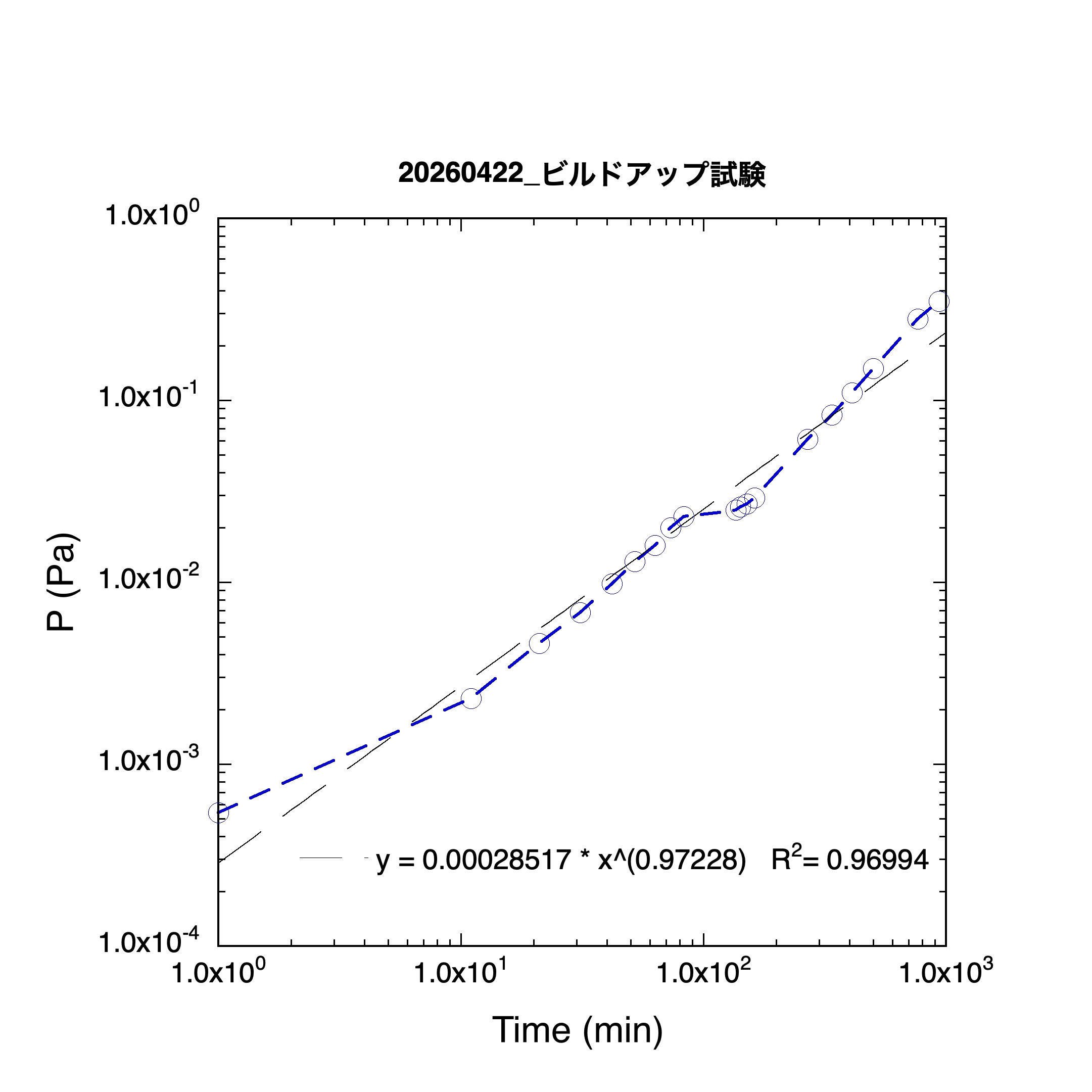
The build-up test was conducted with the SRM and OMMT sharing a common vacuum, and the pressure was recorded using the OMMT’s pressure gauge.
The plot of the build-up test is attached.
The total duration of the build-up test was 935 minutes.
The estimated leak rate from the build-up test was 9.7 × 10⁻⁴ Pa·m³/s.
The slope of the pressure rise was approximately 1.


[Kimura, Tomaru, M. Takahashi, H. Sawada and R. Takahashi]
"Inspection results for the sealing surface of the +X side flange"
A vacuum leak in the range of 1×10⁻⁹ Pa·m³/s was detected, so we inspected the sealing surface of the side flange on the +X side.
As a result, we found a slight scratch on the elastomer surface.
Based on the location of the scratch, we believe it is the cause of the vacuum leak.
After installing a new elastomer on the sealing surface of the +X side flange, the flange was closed.
The flange fastening bolts are currently in a temporarily secured state.
"Inspection results for the sealing surface of the SRM top flange"
After removing the SRM top flange, the condition of the flange sealing surface was inspected.
No dirt or scratches were found on the surface of the elastomer.
Therefore, it was decided to reuse the SRM top flange as a seal.
[kimura, hSawada, Yasui]
We had the build-up test again. The slope of the pressure rise rate was approximately 0.5 for the first 30minutes and then rose to about1.2.
During the buildup test, we checked the Q-mass data and found that the N₂/O₂ ratio was not 4, indicating that it differs from the composition of the air.
We also had the helium leak test, and a small leak ( ~1.0E-10 Pam^3/s) was detected on the +X-side-flange.
Finally, we replaced the dry pump with a repaired one to improve its performance.
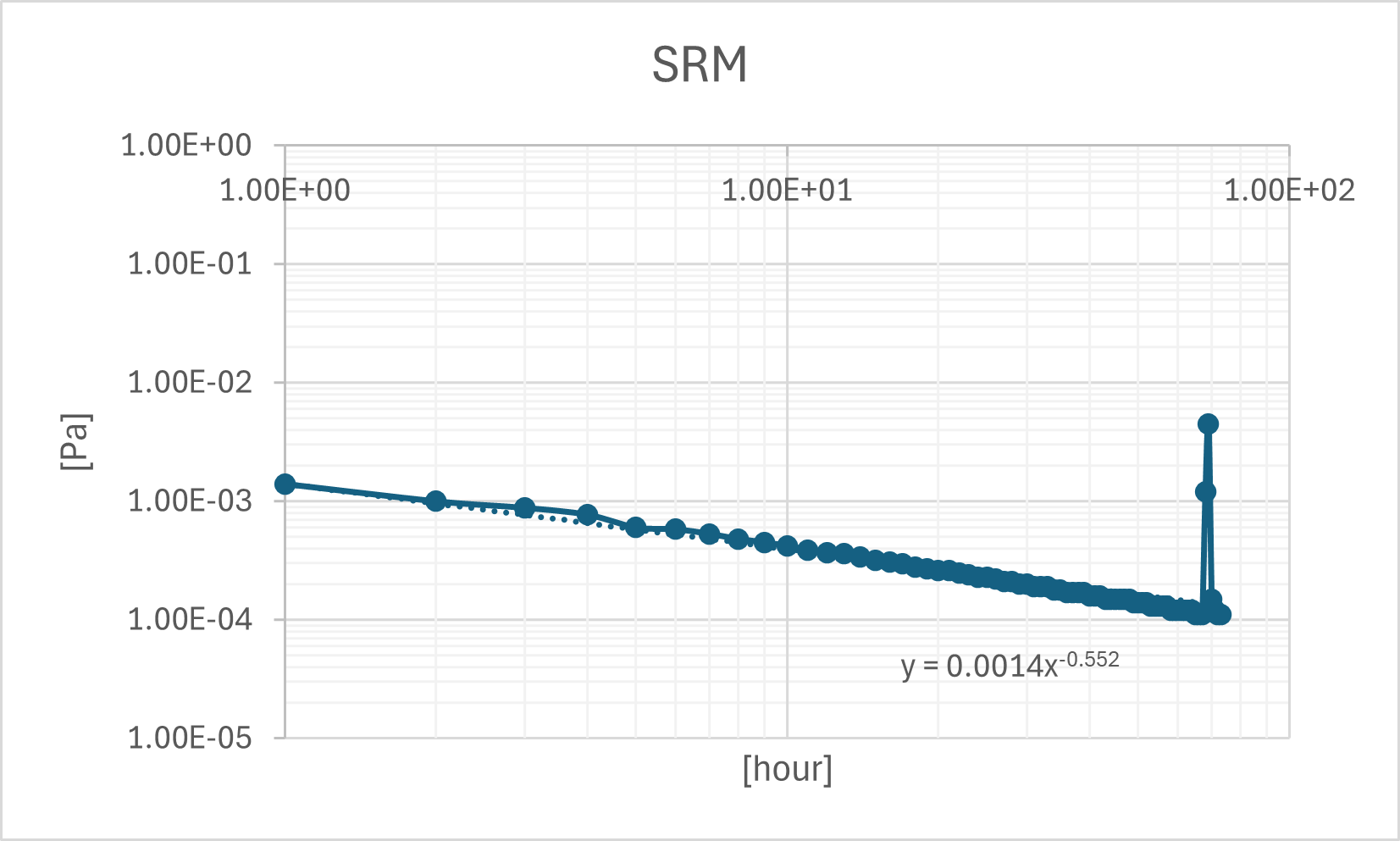
The log-log plot of the SRM pressure after TMP startup indicates that the pressure is still decreasing.


[Kimura, Yasui]
1. Build-up test
We had the build-up test by closing the GV between the duct and the pumping unit.
The slope of the pressure rise rate was approximately 0.6, which is the same rate as yesterday.
During the build-up test, I checked the rate of the pressure decrease with the TMP alone.
According to our logbook, when we tried to swich the vacuum pump from TMP to IP on 7 January 2026, we closed the GV between duct and pumping unit. At that time, the pressure value immediately droped from 2E-5 to 6E-6 Pa. Sine it took 1hour 47minites to reach the pressureof 6E-6Pa from 2E-5Pa this time, there seems to be something affecting the TMP performance.
2. Pressurization
We pressurized SRM again.
13:27 duct-side GV open
13:33 start pressurization 2.0Pa (cylinder pressure: 11.8 MPa)
13:40 3.0E3 Pa
13:57 1.0E4Pa
14:05 1.4E4pa
14:23 2.3E4Pa
14:37 3.0E4Pa
15:00 4.1E4Pa
15:08 4.7E4Pa
15:20 5.5E4Pa
15:30 5.9E4Pa(cylinder pressure: 1MPa->replace with a new cylinder(15.8MPa)
15:40 6.1E4Pa
16:00 7.3E4Pa
16:10 7.9E4Pa
16:20 8.7E4Pa(cylinder pressure:10.5MPa)
We will continue to pressurize it to atmospheric pressure on 30 April morning.

[Kimura and Yasui]
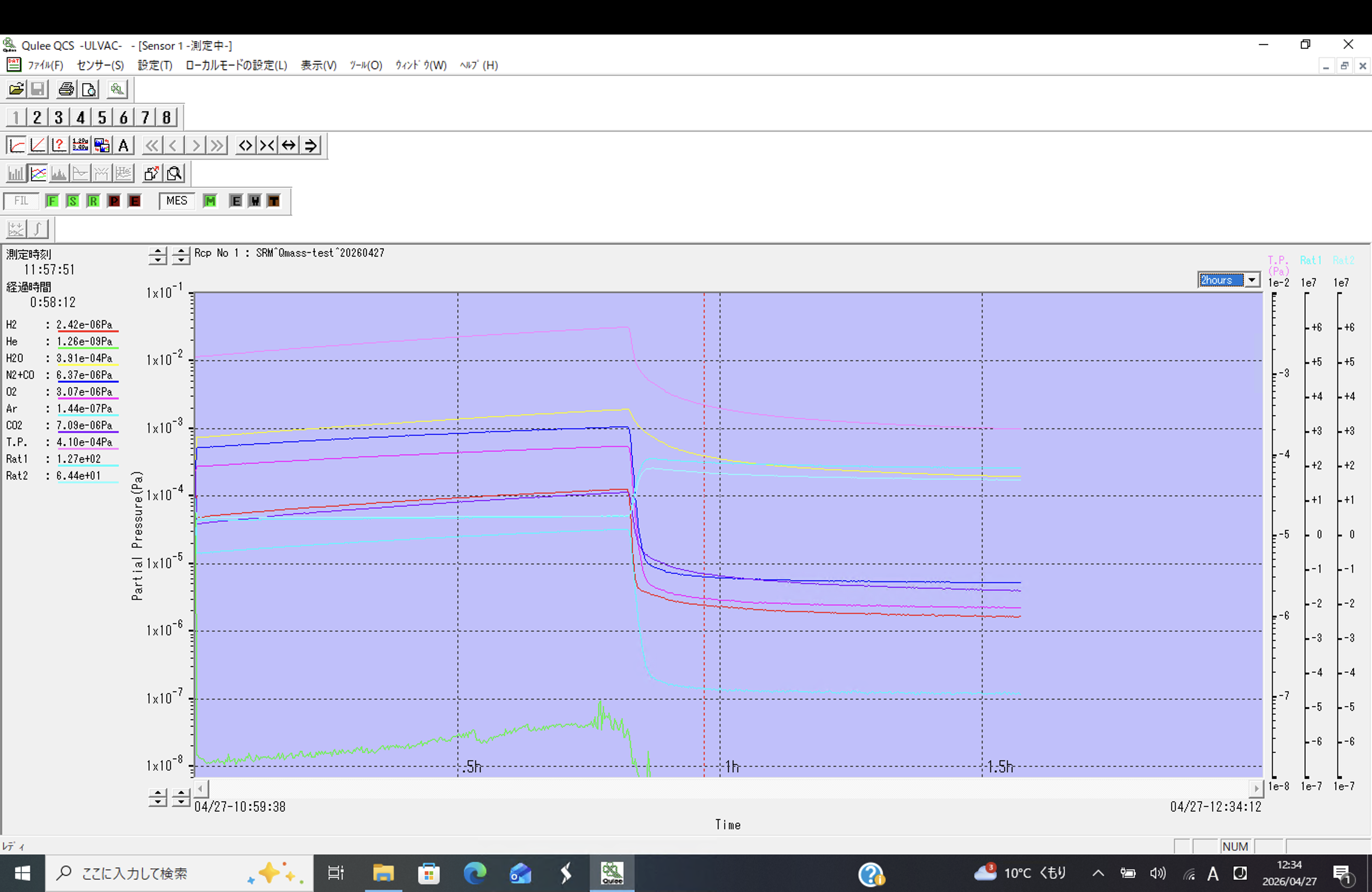
Attached is the residual gas distribution during the SRM build-up test using the Qmass installed in the OMMT.
Since the pressure inside the Qmass analysis tube exceeded 1×10² Pa, the Qmass measurement was interrupted at 12:45 p.m. due to the interlock mechanism.

[mTakahashi, Yasui]
We tried a nitrogen purge to promote H2O removal.
9:37 9.3e-1 Pa
9:44 stopped the dry pump
9:58~ N2 purge
10:09 8.8e3 Pa
10:12 started the dry pump
13:14 24 Pa(SRM), 9.2e-2 Pa(OMMT)
13:15 GVommt open->14Pa(SRM), 12Pa(OMMT)
13:16 started the TMP
So far, the pressure has decreased faster than in the previous trial on April 24.
It took 1 hour 8 minutes to reach 4e-4 Pa from 1e-2 Pa this time, whereas it took 10.5 hours last time. The nitrogen purge seems to have been effective.
Tanikawa, Uchiyama
We turned of the ion pump at SRM (#14) at 9:34. After that the vacuum pressure in SRM increased and reached 1E-3Pa at about 10:50.


Tanikawa, Uchiyama
Around 12:40, we noticed a sudden pressure increase and then a decrease again.
Since we suspected that the ion pump had stopped unexpectedly, we entered KAGRA and checked the ion pump. At the KAGRA site, we found, however, that the ion pump and TMP worked normally.
We continue to see changes in the vacuum pressure in SRM.






I opened GVsrm and closed the GV between TMP at SRM and the T-duct at 9:40. The vacuum pressure around SRM changed as follows,
(1) Open GVsrm: 4e-5Pa -> 3e-5Pa,
(2) Closed GV between TMP and T-dauct at SRM: 3e-5Pa -> 3hour -> 5.5e-5Pa.
Since the vacuum pressure became stable at 5.5e-5Pa, I stopped TMP.
Before stopping TMP, I set SRM and SR3 safe. After stopping TMP, I set SRM isolated and SR3 Lock_acquistion.
[Kimura, Yasui and Uchiyama]
On the afternoon of May 12, we shut down the Q-mass unit that had been temporarily installed on the OMMT's exhaust line.
Data on residual gas distribution up to May 12 is stored in a folder within the KAGRA Dropbox.
Going forward, we will consider temporarily operating the Q-mass unit to investigate the exhaust malfunction that occurred this time.
Details on the operational method will be reported separately.
[Kimura and Yasui]
On JUne 15, we had a final vacuum leak test for SRM.
Then we detected a vacuum leak in the range of 1×10^-10 Pa·m³/s at the side flange on the +X side.
We confirmed that there were no other leaking flanges besides this one.