[Takano, Saito]
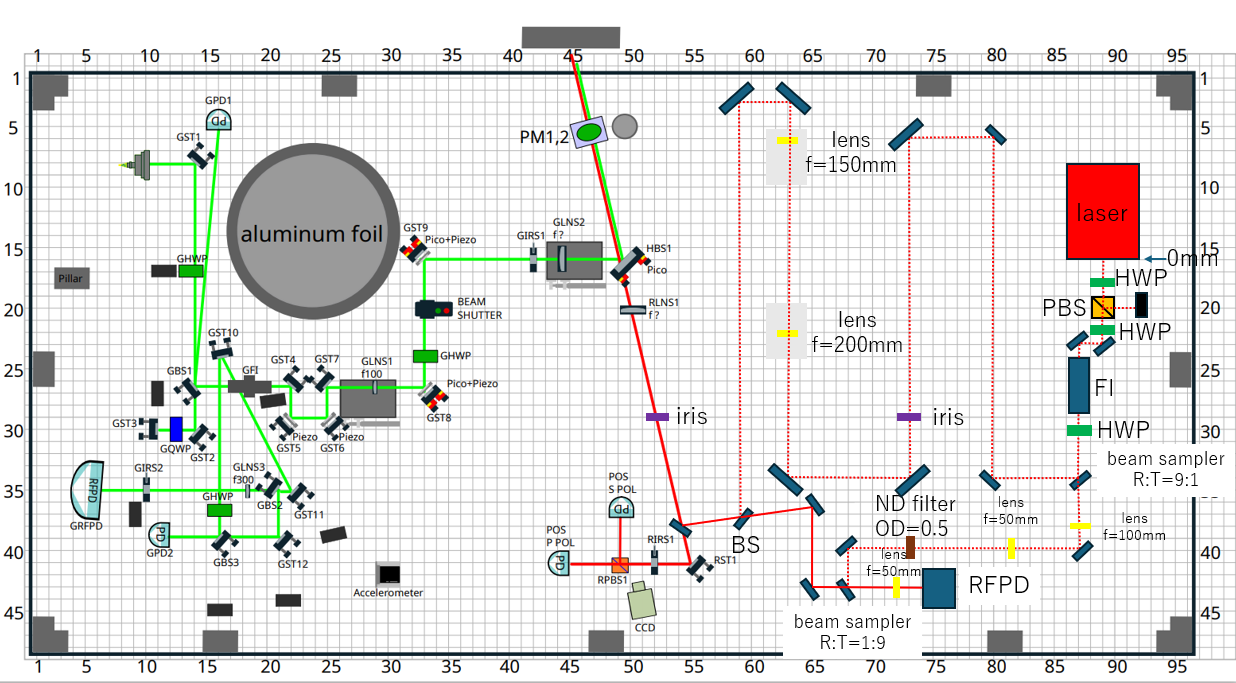
To match the modes of the main laser and the sub-laser incident on the RFPD, we redesigned the optical layout for the PLL. In addition, although the transmitted beam split into two after the light coming from the interferometer passed through the BS, it was found that the BS was not the cause. Furthermore, both of the split beams were s-polarized. Interference fringes were also observed in the beam coming from the interferometer.
- To match the mode of the sub-laser to that of the main laser at the RFPD, we calculated the positions of two lenses for mode matching. In the mode-matching design, the sub-laser mode was adjusted to match the main laser mode. Based on these calculations, we redesigned the optical layout for the PLL (Photo 1). Following the new design, mirrors, lenses, the ND filter, a beam sampler, and the RFPD were reinstalled.
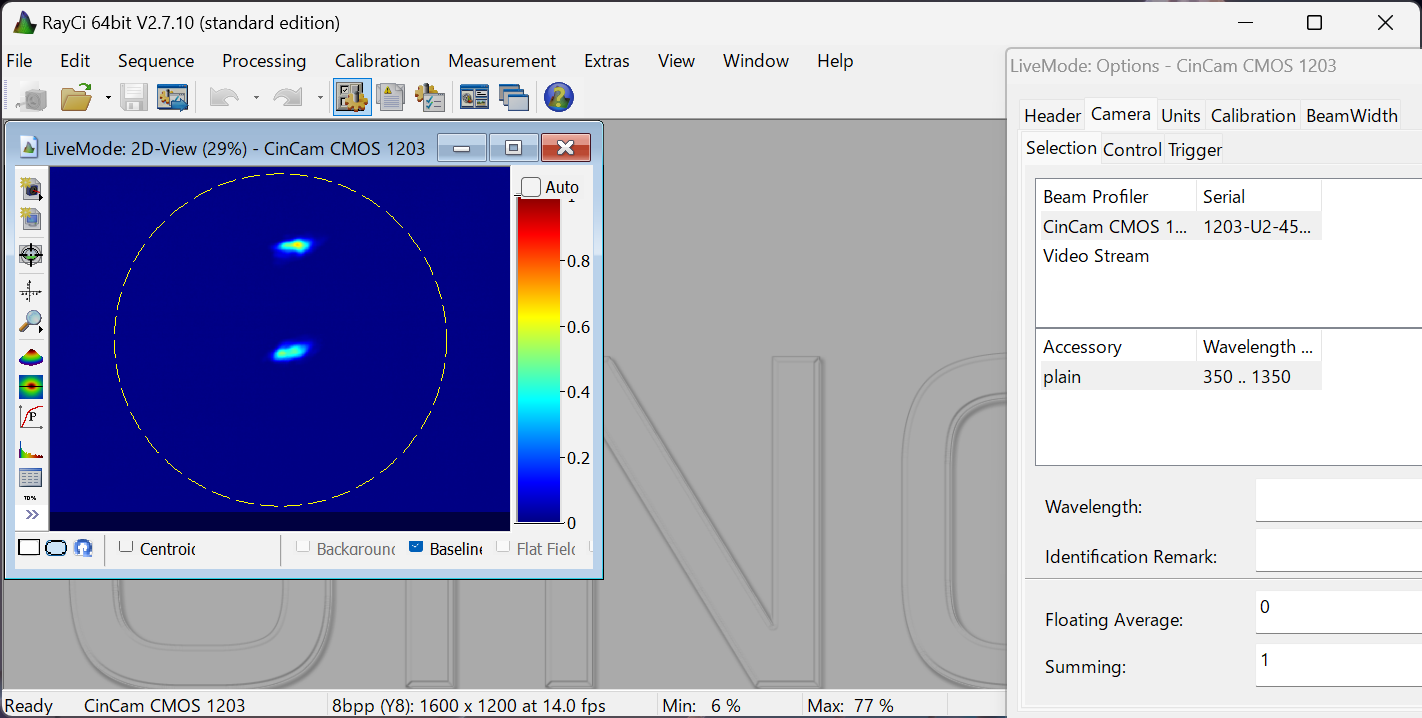
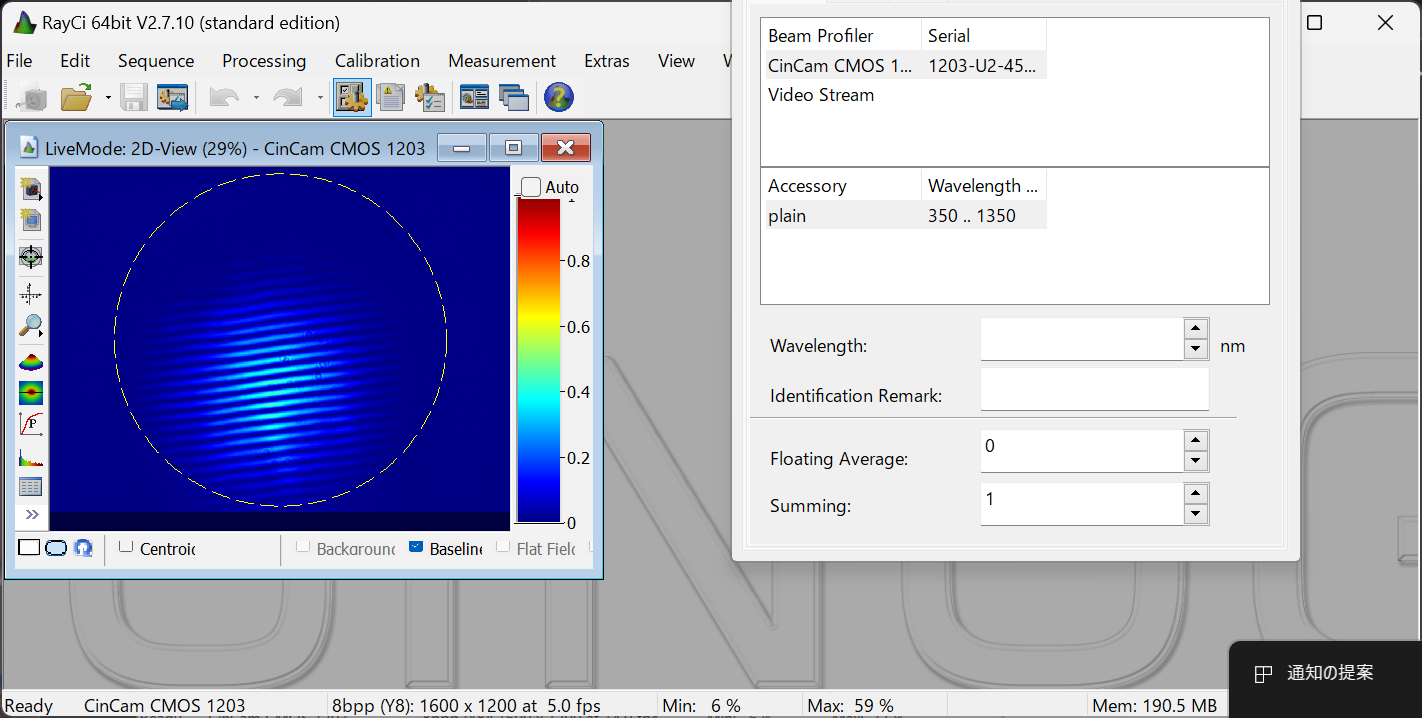
- In addition, since the beam coming from the interferometer was passing near the edge of the BS during transmission, we observed the transmitted beam using a beam profiler. As a result, the beam was found to split into two (Photo 2). To determine whether the beam had already split before reaching the BS, we also observed the beam profile before the BS using the beam profiler (Photo 3). In this case, the beam was not split into two. Therefore, we adjusted the mirror before the BS so that the transmitted beam would not pass near the edge of the BS. However, the beam still remained split into two. Since the beam had also been observed to split near the waist during a previous beam profile measurement of the light coming from the interferometer (klog:36724), it was concluded that the BS was not the cause of the beam splitting. In addition, a PBS was placed before the BS, and a beam profiler was used to examine whether the split beams had different polarizations. However, both beams were found to be s-polarized.
- Interference fringes can also be seen in Photo 3, although these were not observed during the previous beam profile measurement of the light coming from the interferometer (klog:36724). It is suspected that the SRM may be related to this effect.