The GVbsX and GVbsY were closed at 18:53 today (11/23/2026).
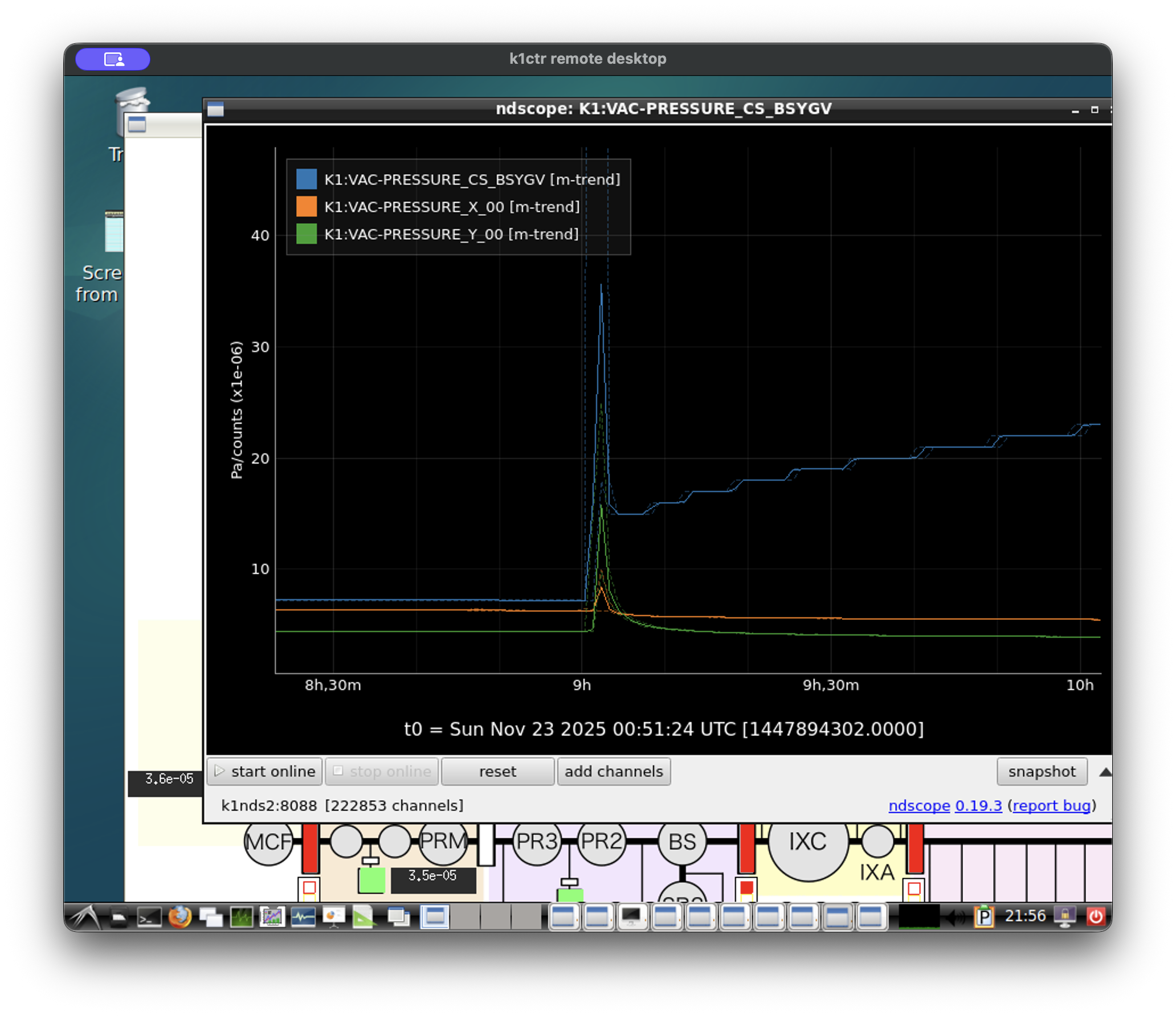
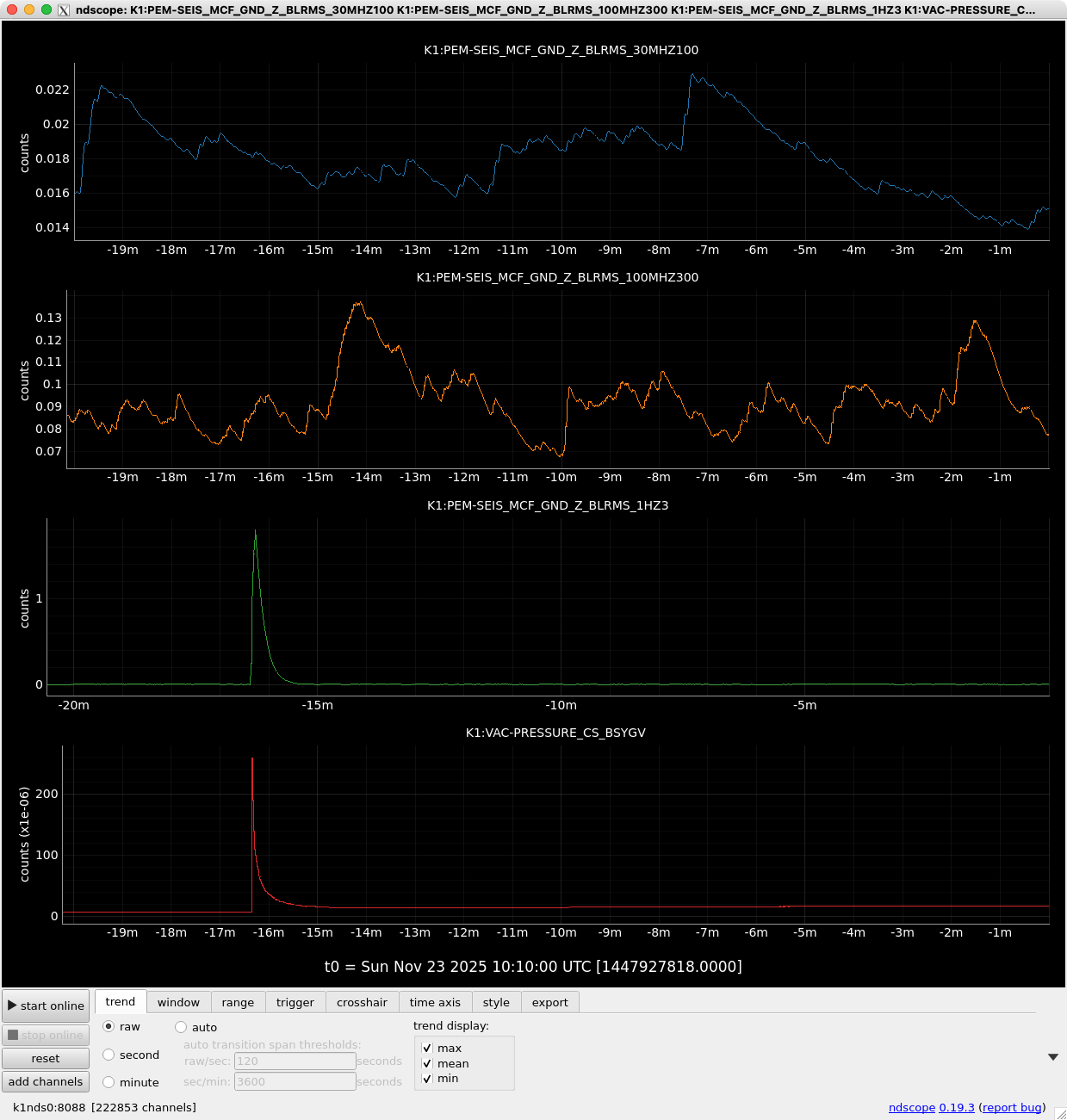
The vacuum pressure increase was detected by the BSYGV (+Y side of BS, used to determine the GV interlock), and it exceeded 3E-5Pa in the attached plot. Since the interlock threshold of GVbsX and GVbsY is 1.2E-5Pa, it is thought that the interlock detected an abnormal value and automatically closed the GVs.
If you look at the timing and width of the vacuum degree increase by the vacuum gauge (X_00, Y_00) on the arm side of IX and IY, something occurs from the central side and looks like it propagated to the arm side. After GV is closed, the values of X_00 and Y_00 return to normal, while the values of BSYGV, which have been separated from low temperatures by GV, have decreased once and then showed an upward trend.
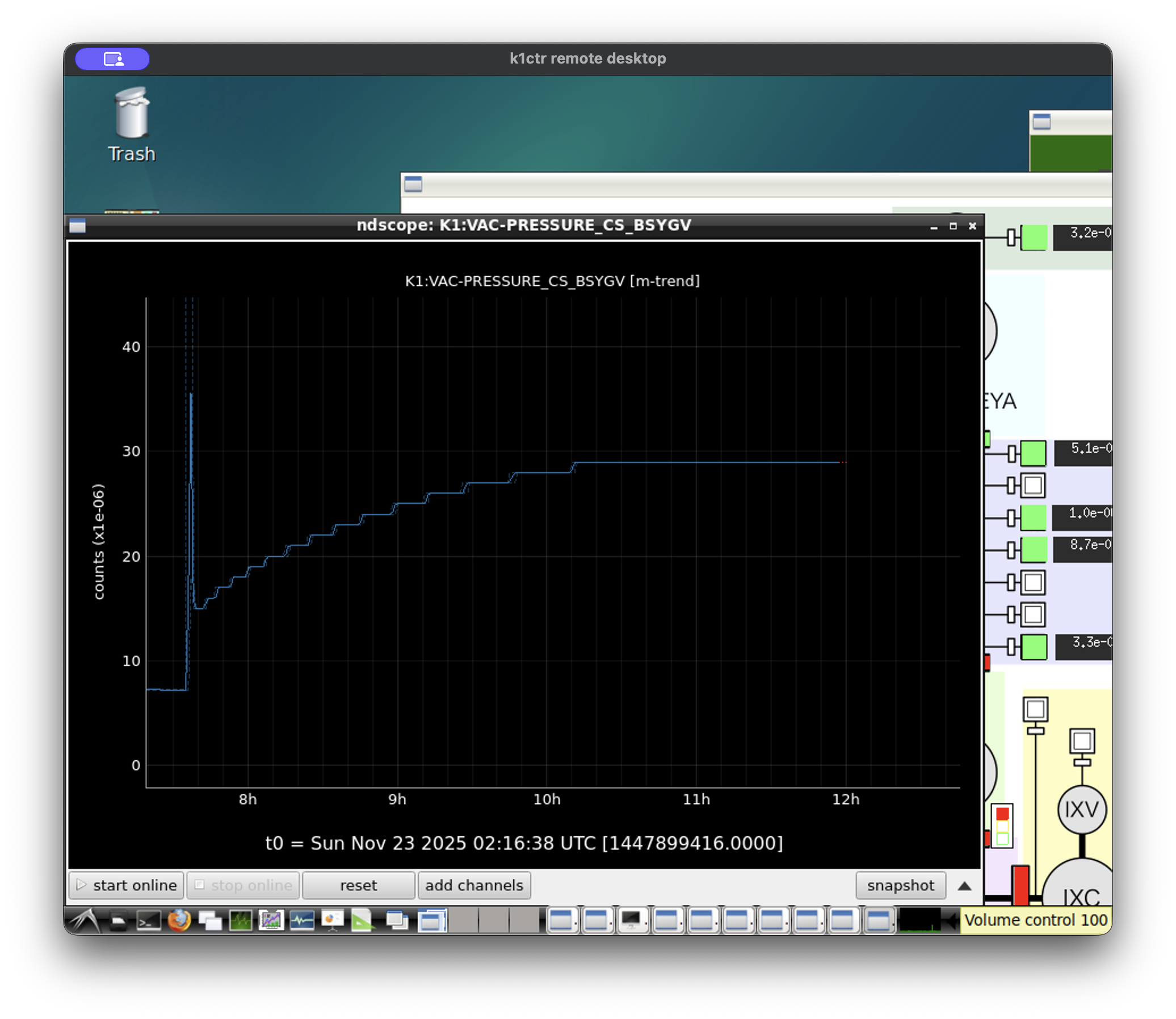
At 23:20, the upward trend was slowed (Fig.2).
Kimura-sama reported that pressure increases such as N2+CO2, O2, etc. were also measured at Qmass. Since the change in water was small, it is thought that the composition of the air has increased.
After the alert was sent to Slack, some members gathered at zoom1 to discuss.
・Cryocoolers operation normally → It is difficult to imagine that the vacuum degree will deteriorate due to temperature rise
・The vacuum degree of IX and IY is calm after closing GVs
・The pressure on the BS side continues to rise, but considering that the cryo pump has been separated, it is a reasonable change.
From this situation, we decided to enter the mine tomorrow and check the site while watching the progress.
Since I did not know where the problem occurred in IX, IY, and BS, I closed the GV (GVitmx, GVitmy) on the arm side of IX and IY to protect Xarm and Yarm. In addition, the GV (GVifi) between MCF and IFI was also closed. I think it is possible to isolate the problems on the IMC side and around BS.
Tomorrow, we would like to check the change in the vacuum degree in the central area and check the operation status of the vacuum pump at the site.
Depending on the degree of vacuum, it is possible to switch to TMP.
It is a possible cause,
・Sudden vacuum leak
・Sudden outgas
・Abnormal stop of the vacuum pump
・etc.
There may be, but at this stage, it is impossible to say.


Kimura, Uchiyama
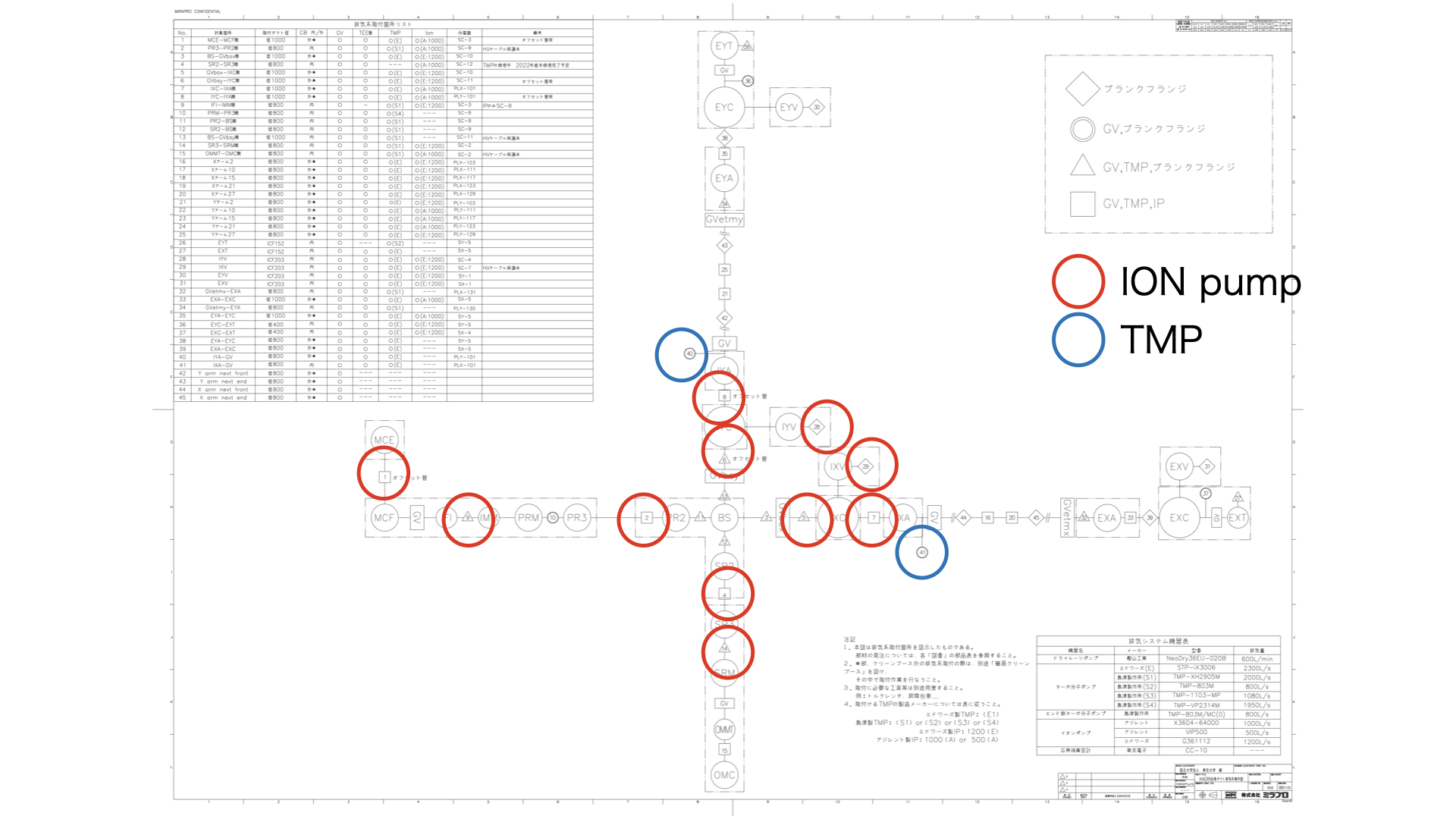
We checked the operational status of the pumping units, which consist of 11 ION pumps and 2 TMPs.
No pumping unit shows an error.

Yamamoto-kun's pointing issue is interesting. Figure 1/3 shows the vacuum level enhancement and MCD_GNG_Z_OUT_DQ.
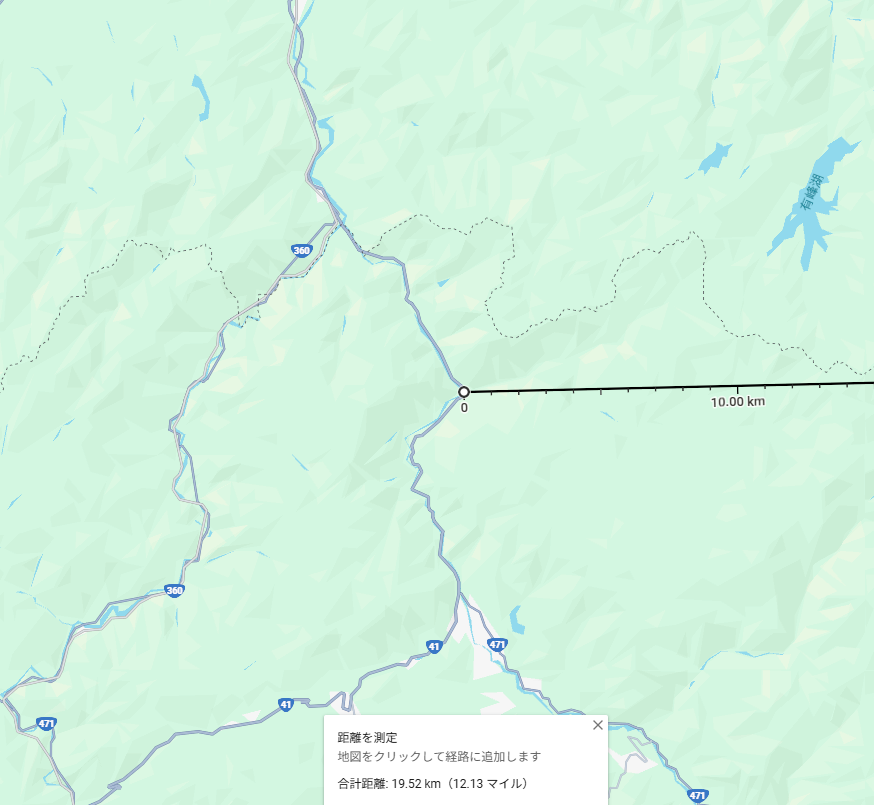
However, such local earthquake has happened many times before. Judging from the P/S arrival time difference (~ 1 sec), the source was 8km! (Fig.2 shows the area map with a ruler)away from here. In this sense, this EQ happened very near the KAGRA site. In addition, the most impressive waveform is that rather high seismic pulse at the beginning of P-wave forms. I have never seen such a high P-wave pulse. We should ask opinions from Araya-sana and Takamori-kun.
These unusual P-waves could occur this time instant leaking at somewhere. It is also better to check the vacuum cramping/tension around BS-GVs.


At the same timing, was any sound captured by PEM microphones in the mine? From my past experience, an 'eathquake in the mine' feels more like a sudden shock compared to those on th ground surface.
The recent nearest earthquake was reported in klog#34359. However, the seismic noise level peak was around 10, on the other hand, 100 in this time. So, much larger earthquake near the KAGRA site seemed to happen.
This time, seimic noise arrival time differences are Corner -> 490msec at Xned, and Corner -> 67msec at Yend. So, the WSW direction is expected, and this can be along the Atotsu-river fault, and might be the same kind of earthquake that happened on June 23.
The plot shows the trend of the vacuum pressure. The vacuum pressures reached a stable point.
SEO discussed the recovery plan.
According to the plot, there is no serious vacuum leak. We decided to start preparing for opening the GVs, and we operated two TMPs around BS to reduce the vacuum pressure around BS.
We can open the GVs tomorrow morning.
We will perform leak checks around SR2 and MCE in the middle of December.
ICF150 flange at +X and +Y side of SR2 and the top flange of MCE, which have been found to leak in the past.


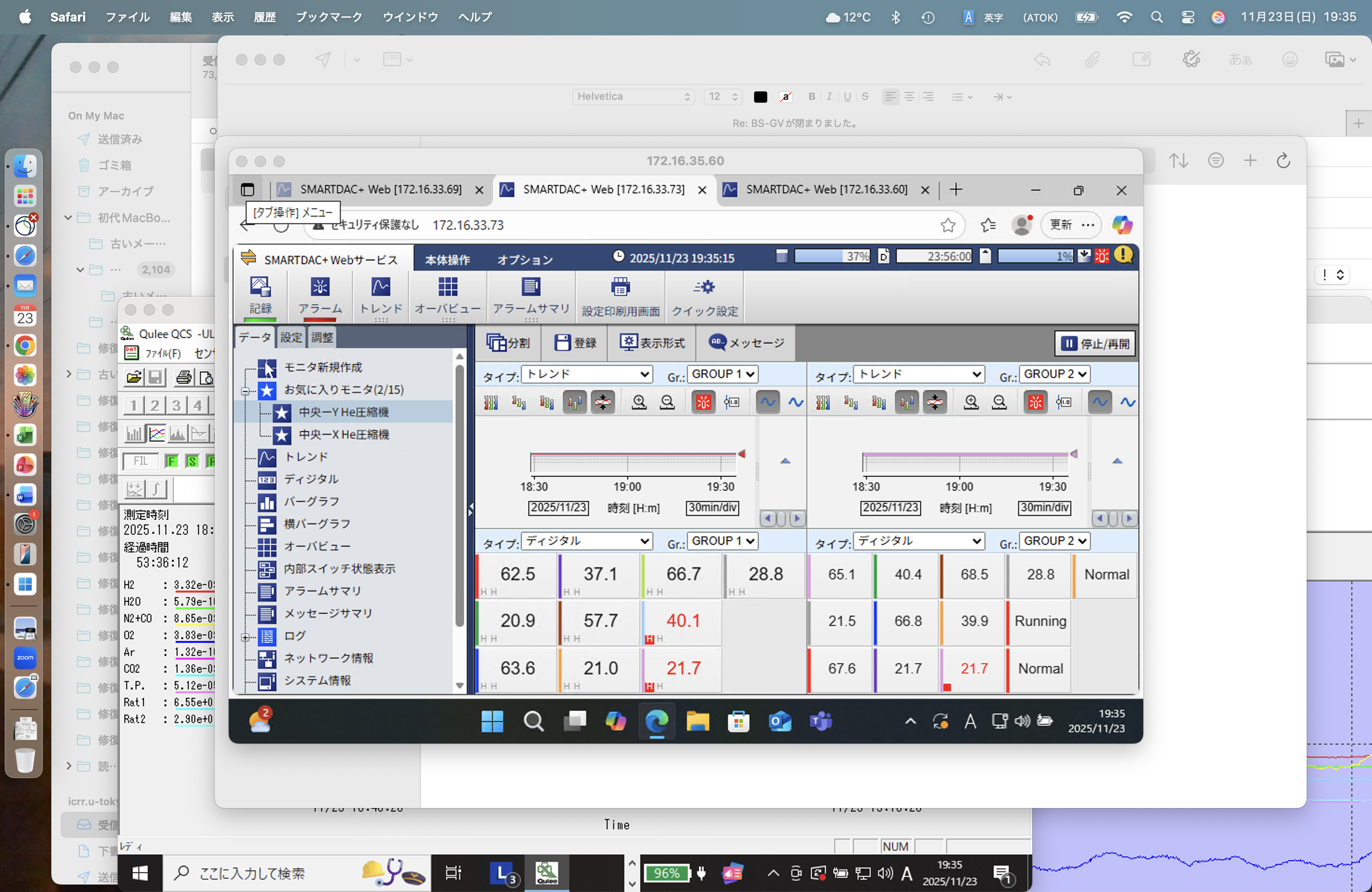
Attached for reference are the Q-mass graphs for the three units before and after the gate valve closed, along with the temperature distribution of the IYC compressors
Based on the temperature distribution of the IYC compressors, it is estimated that no abnormalities such as compressor shutdown occurred..


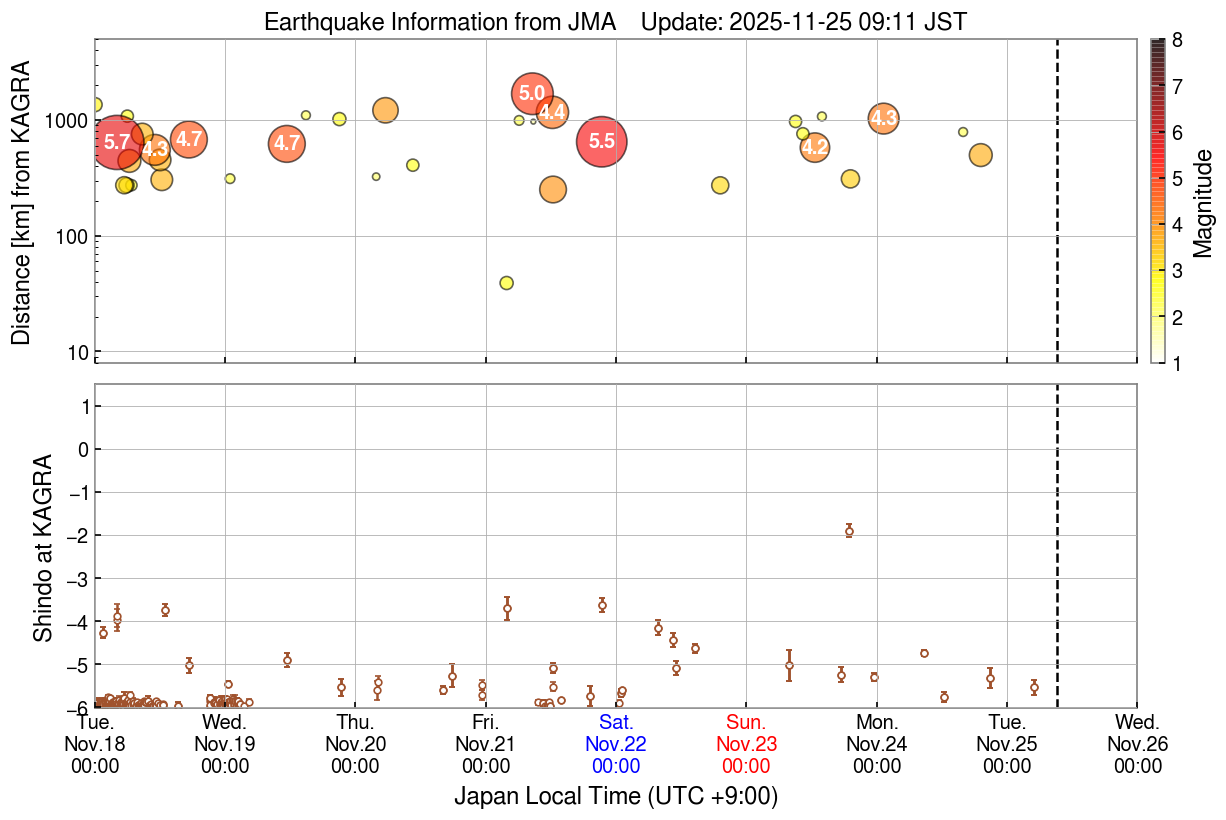
Takamori-kun found the earthquake information as Fig1~3.


Vacuum pressure seems stable this morning.
BSYGV: 1.3e-5Pa
MCF: 3.1e-5Pa
X_00: 2.4e-6
Y_00: 4.2e-6Pa

The shindo at KAGRA was about -2

I checked the PEM signals in the summary page.
Around 9 UTC, gaps are found in the spectrograms. It happened not only in microphones and accelerometers but also in magnetometers and voltage meters.
So I suspect some electrical (analog? digital?) problems rather than mechanical ones.
![35656_1764030893_FireShot Capture 337 - PEM - Acoustic Booth - [gwdet.icrr.u-tokyo.ac.jp].png](uploads/tn/tn_35656_1764030893_FireShot Capture 337 - PEM - Acoustic Booth - [gwdet.icrr.u-tokyo.ac.jp].png)
![35656_1764030955_FireShot Capture 338 - PEM - Magnetic - [gwdet.icrr.u-tokyo.ac.jp].png](uploads/tn/tn_35656_1764030955_FireShot Capture 338 - PEM - Magnetic - [gwdet.icrr.u-tokyo.ac.jp].png)
Attached is the trend graph for the Q-mass installed on BS. The partial pressure of residual gas has returned to the level prior to closing the gate valve.


Kimura, Uchiyama
We opened GVifi, GVbsx, GVitmx, GVbsy, GVitmy at 10 AM.
IXV and EYV arrived at the similar timing, EXV delayed (Expected)
Clear p-wave and s-wave can be seen
There are higher frequency component in X/Y direction compared with Z direction


[Kimura and M. Takahashi]
We inspected all vacuum pump units witout the V-chamber areas.
No abnormalities were confirmed in the vacuum pump units of the central mirror room, Y-arm, or Y-end mirror room.
However, the following abnormalities were confirmed:
1. Mortar spray peeling from the ceiling near 530m on the X-arm
2. Looseness in two jacks on the X-10 ion pump support frame
3. Looseness in GVex anchor bolts
Tightening work was performed for items 2 and 3.
Photos are attached for reference.


[Kimura. Yasui, M.Takahashi and H.Sawada]
M. Takahashi-san and H. Sawada-san found during their weekly inspection that the TMP for X-end #37 had stopped.
After receiving their report, I confirmed the situation on-site.
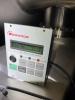
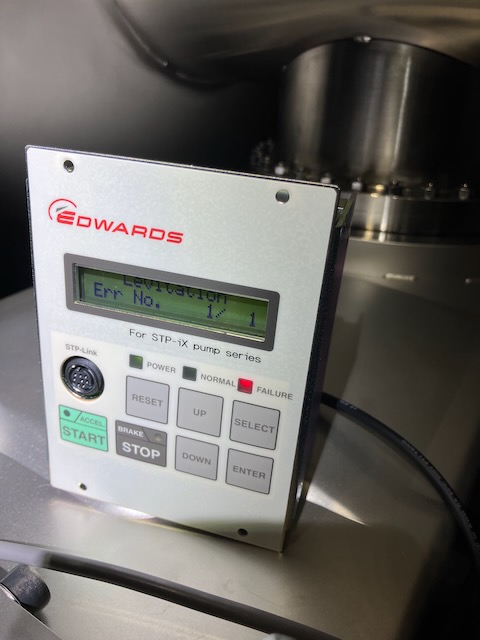
The #37 TMP had stopped, displaying “DRV Overload”. The cause of the stoppage was overload due to the dry pump connected to the TMP stopping.
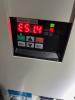
The dry pump for #37 displayed an “ES1.4” error. (The upstream gate valve of the TMP was closed, so no vacuum leak occurred due to this failure.)
This error indicates a “ground fault,” suggesting a failure in the inverter circuit controlling the motor.
As a temporary action, the main breakers for the TMP and dry pump were turned OFF, and a “Do Not Operate” sign was posted.
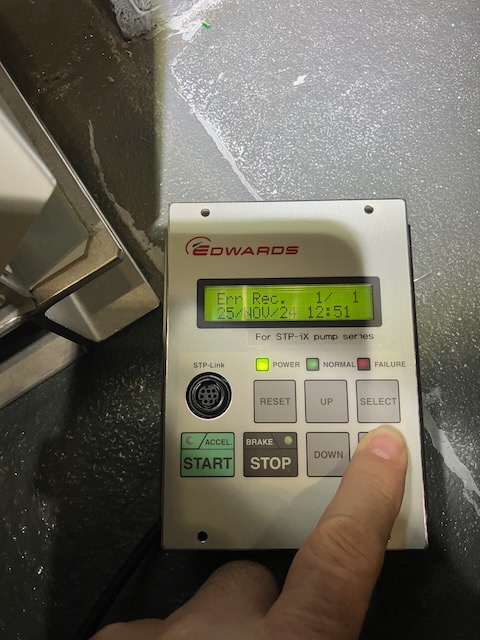
To determine the exact time the dry pump failure occurred, the TMP error log was checked.
The internal timer recorded the TMP error occurrence time as November 24, 2025, at 12:51.
The TMP internal clock was delayed by 1 hour and 10 minutes relative to actual time.
Therefore:
TMP shutdown time: November 24, 2025, at 14:01
Estimated time of dry pump failure: November 24, 2025, 13:31
This failure is estimated to be unrelated to the earthquake that occurred around 18:53.
Note (Manual Explanation):
“DRV Overload”: Motor Driver Overload
If the TMP fails to reach its rated rotational speed within approximately 30 minutes after startup,
or if it remains in an accelerated state for approximately 30 minutes during operation, the TMP will decelerate and stop.