Abstract:
I have estimated how various noise sources within the CARM loop contribute to the frequency noise injected into the interferometer.
The current result is extremely preliminary, and I propose several steps needed to produce a more accurate and reliable CARM noise budget.
Details:
The frequency noise currently dominates above 1 kHz and may be increasing the shot-noise floor of DARM in the 100 Hz – 1 kHz band.
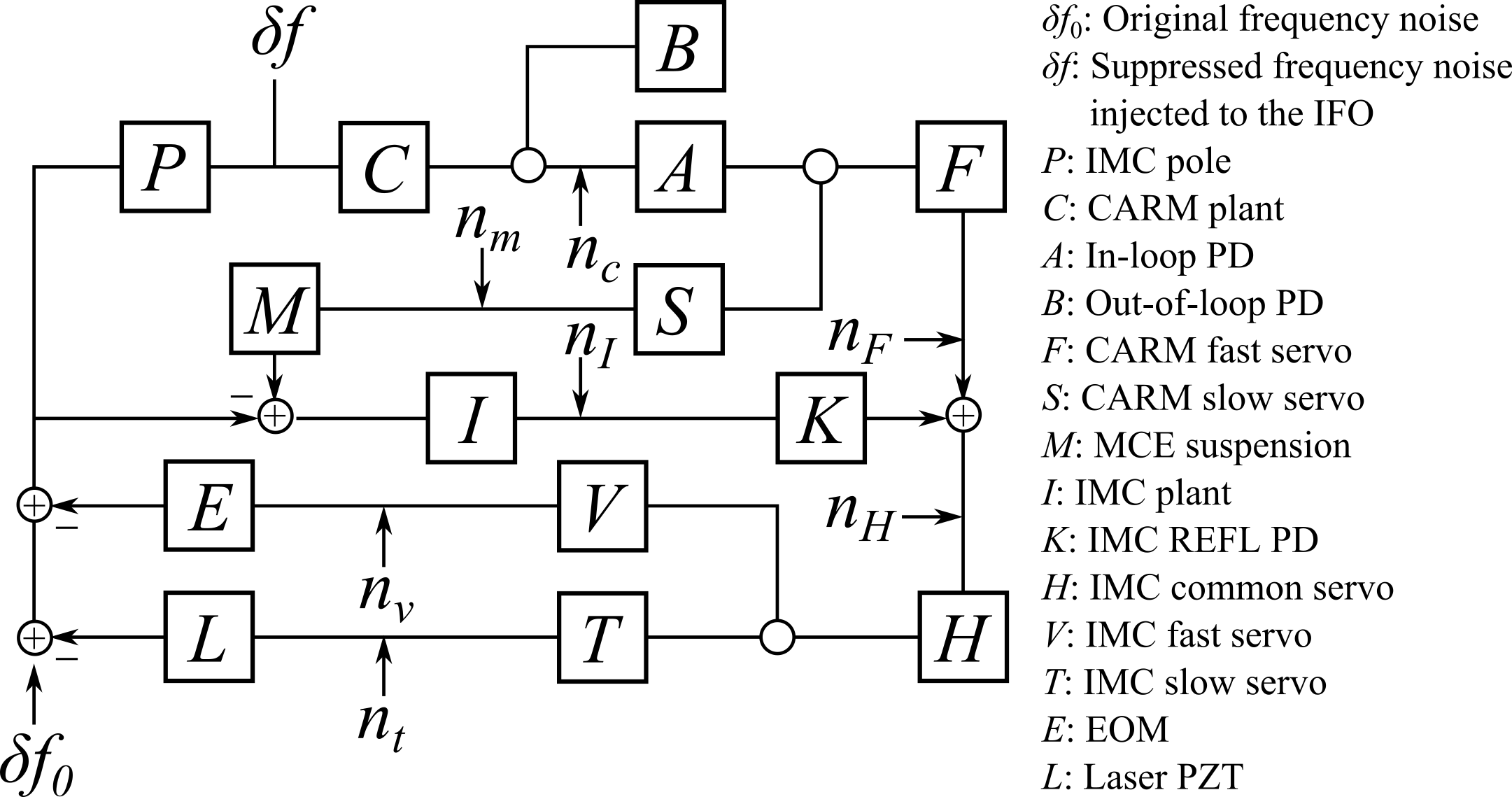
To support future noise reduction efforts, I constructed a block diagram of the CARM control loop, calculated the noise contributions injected at different points, and outlined strategies to evaluate each of them.
The methodology follows closely the work by Craig, and readers interested in the details are referred to his PhD thesis.
The block diagram is shown in Fig. 1.
The original laser frequency noise, δf₀, is suppressed by the CARM servo to δf and is then injected into the interferometer.
At this stage, I neglect the mass feedback to the MCE, since this contribution is negligible above 100 Hz, but it should be included in future analyses.
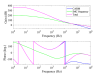
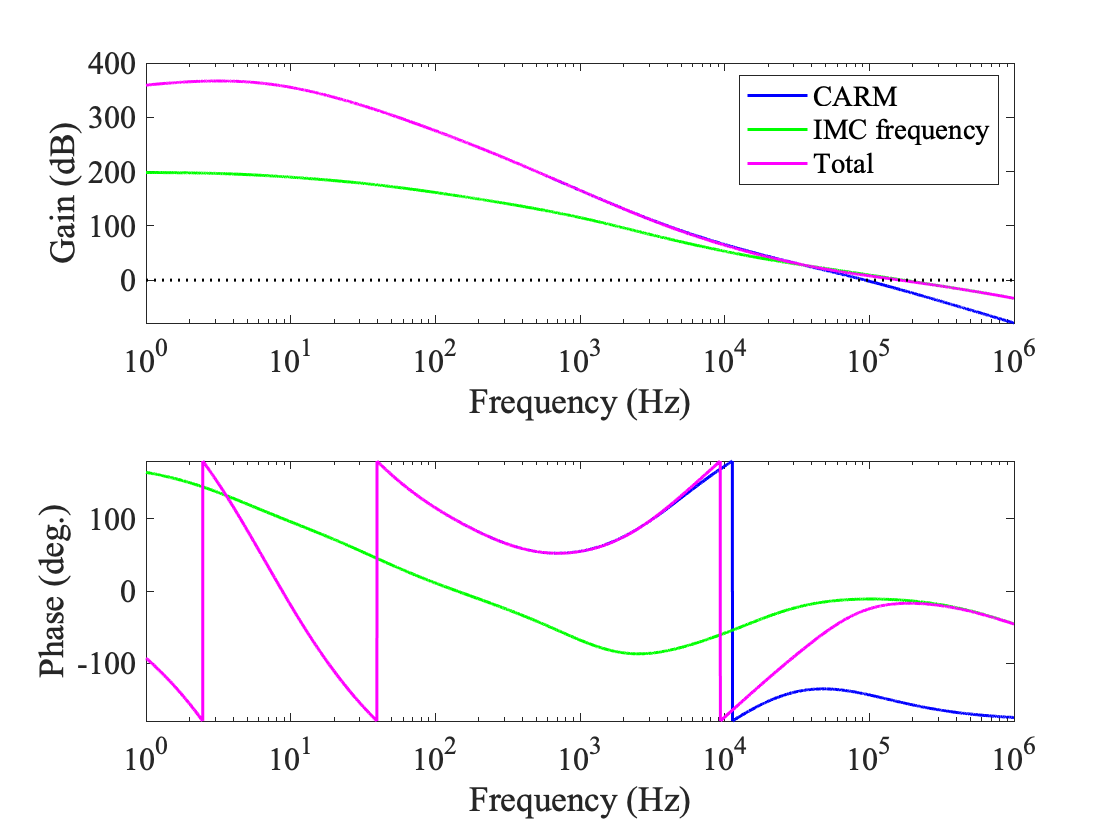
Figure 2 shows the openloop transfer functions of the CARM loop (G_carm) and the IMC frequency control loop (G_imcf).
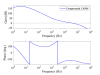
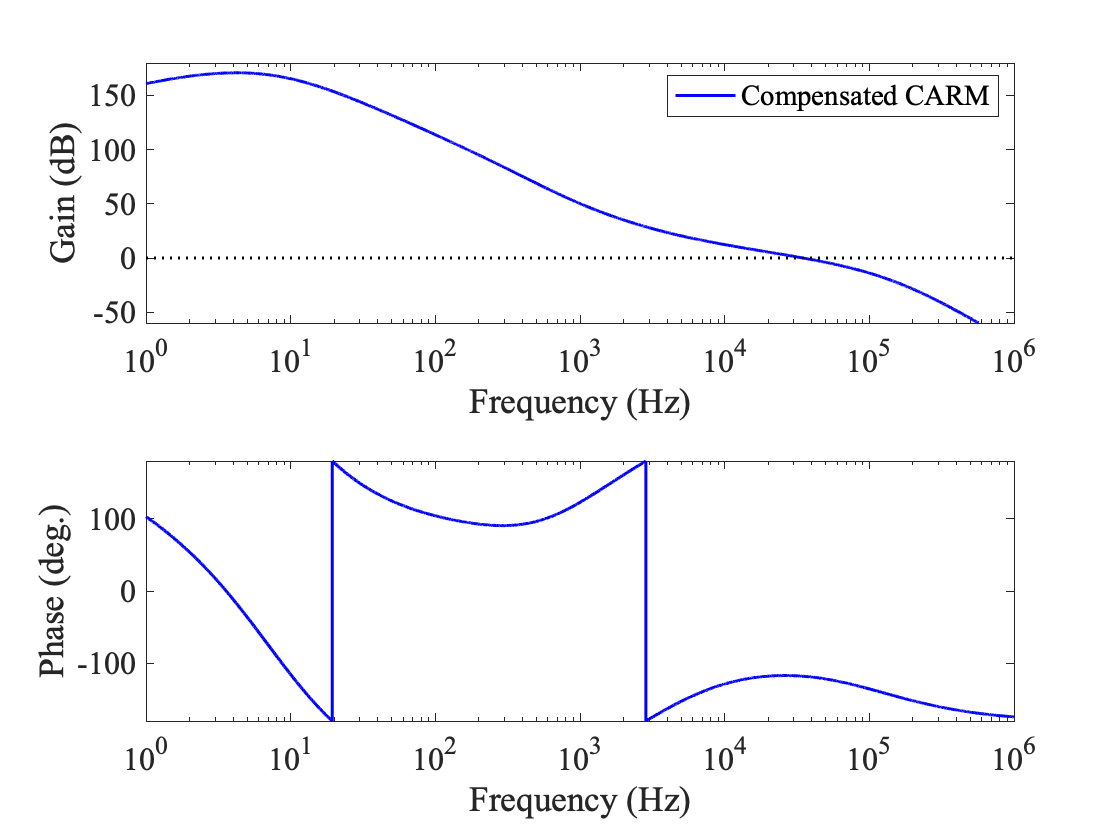
Figure 3 shows the compensated openloop gain of the CARM loop, expressed as G_carm / (1 + G_imcf), which we call 'CARM gain' typically.
The CMS servo filter responses are included in F and H, and the optical gains of the CARM and IMC are assumed to be consistent with the measured unity gain frequencies of 40 kHz (CARM) and 150 kHz (IMC), respectively.
The very preliminary CARM noise budget is shown in Fig. 4.
The figure includes the measured in-loop signal calibrated in units of Hz/√Hz, the suppressed contribution arising from the original laser frequency noise (δf₀), the CARM shot noise (n_c), the CMS electronics noise (n_F), and the IMC shot noise (n_I).
These preliminary estimates could differ from the true values by more than an order of magnitude.
To improve the accuracy of the noise budget, I propose the following steps:
-
Check additional gain stages not yet included in the current CMS model.
-
Measure the shot noise and dark noise of the IMC and CARM photodetectors, ideally demonstrating the increase in measured noise floor with higher optical power.
-
Measure the dark noise of the CMS electronics.
Performing these measurements will require a data logger or spectrum analyzer with a sufficiently low intrinsic noise floor, rather than relying on Mokulab or DGS.