- PLANT_PR3_READY_BF_COILOUTF_H{1,2,3}.xml
Similarly with klog31837, there are several excess in ~100 mHz region
- BF -> BF
The amplitude of BF-> BF became smaller.
Ushiba-san mentioned the linear response check for the BF and SF GAS filters.
BF GAS LVDT IN1 9796 -> 12200
SF GAS LVDT IN1 -10484 -> -7800
(Fig.1. showed the reference(2024/6/18), Fig.2. showed the latest (2024/11/27))
From the past measurement in klog2670, the linear range of PR3 BF GAS LVDT IN1 value was -15,000 to 0, so
even in previous (Jul. 2024) was out of linear range, and this measurement was more far from linear range, so the reducing the amplitude would be reasonable.
[Need Takahashi-san's check]
As shown in this klog, the current PR3 BF GAS LVDT IN1 value was far from the linear range (12200 now, linear range -15000 - 0), we need the discussion should we perform the offload.


I checked the TF measurement results for the health check and found strange behaviour.
Since there are so many results different from the reference, I just pick up several results.
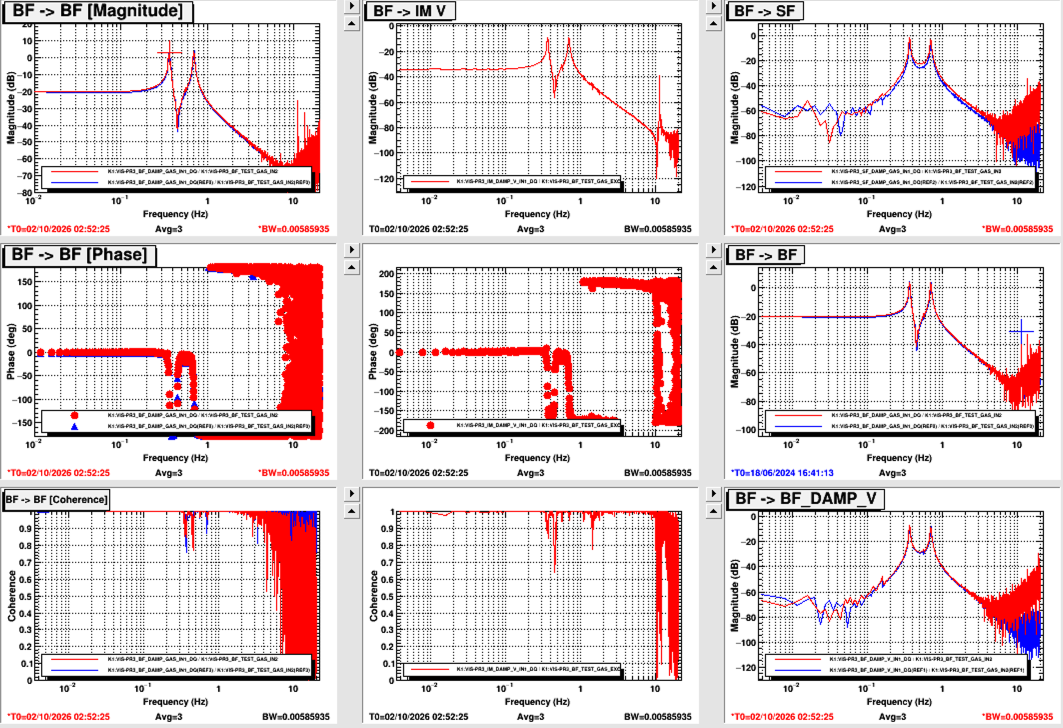
Figure 1 shows the TF measurement results of BF GAS.
The coherence at entire frequency band is lower than before.
I'm not so sure the exact reason but it might imply that the BF GAS is rubbing somewhere.
Figure 2 shows the TF measurement results of IM OSRM V3.
Not only the overall gain but also the TF shape are different from the reference.
I'm also not so sure the reason but this results also imply that the suspension rubbing somewhere.
I checked the BF GAS behaviout when moving SF GAS (fig3) and no strange motion can be observed at BF stage.
This reveals that the suspension is not rubbing on the security flame.
So, we need to check if the suspension is internally rubbing or not.


I investigated the problem, focusing on the low coherence in the TFs of the BF and SF GAS filters.
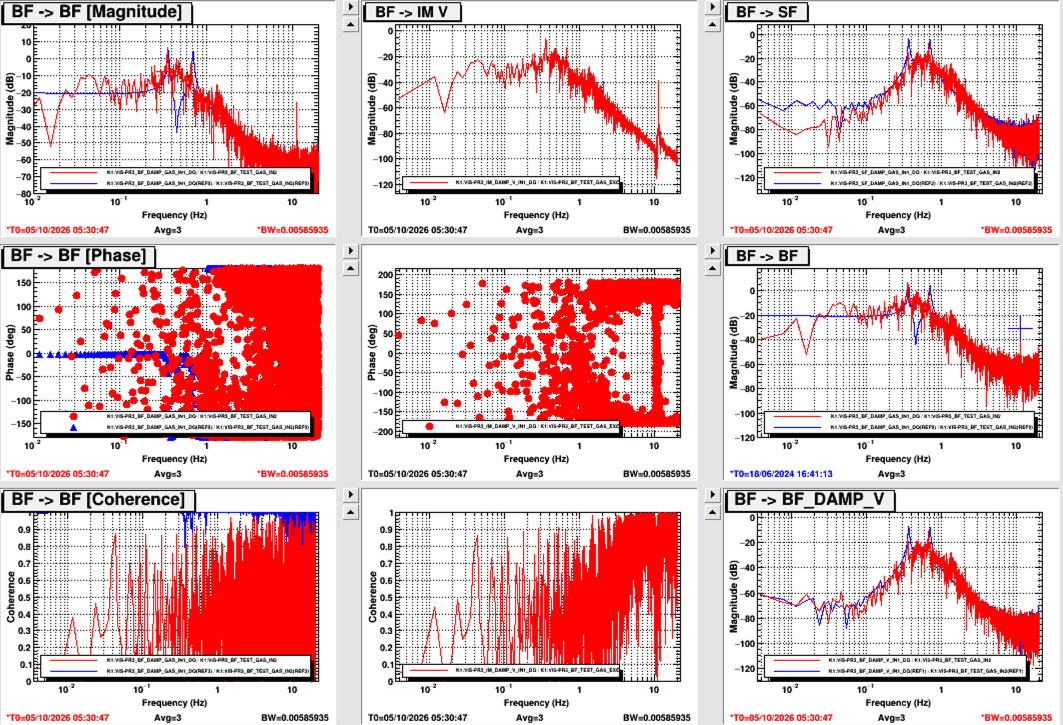
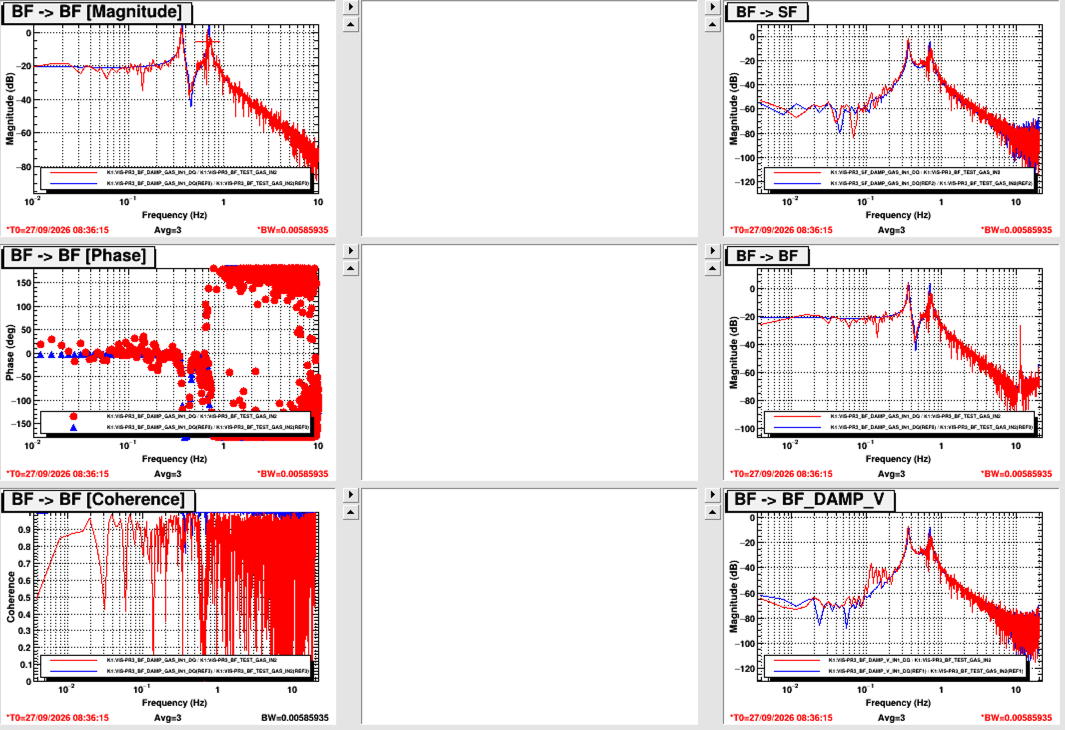
- Fig. 1 shows the BF GAS TF measured today. The coherence was lower than at the last measurement on Sep. 27.
- Fig. 2 shows the BF GAS TF after the offloading. The working points were changed from -2093 to -2567 for SF and from 2788 to 3345 for BF. The coherence was still low.
- Fig. 3 shows the SF GAS TF after the offloading. The coherence was lower than at the last measurement on Sep. 27.
- Fig. 4 shows the BF and SF GAS LVDT responses when actuating the BF or SF by -30000 and +30000 counts.
The mechanical behavior of the BF and SF GAS filters looks natural. We should check the coil driver for the GAS filters.


The figure shows the additional TF measurement from the BF GAS actuator to the IM V. This TF is similar to the TF to the BF GAS LVDT. This channel is not included in the normal health check. The coherence of the TF to the IM V was also lower.

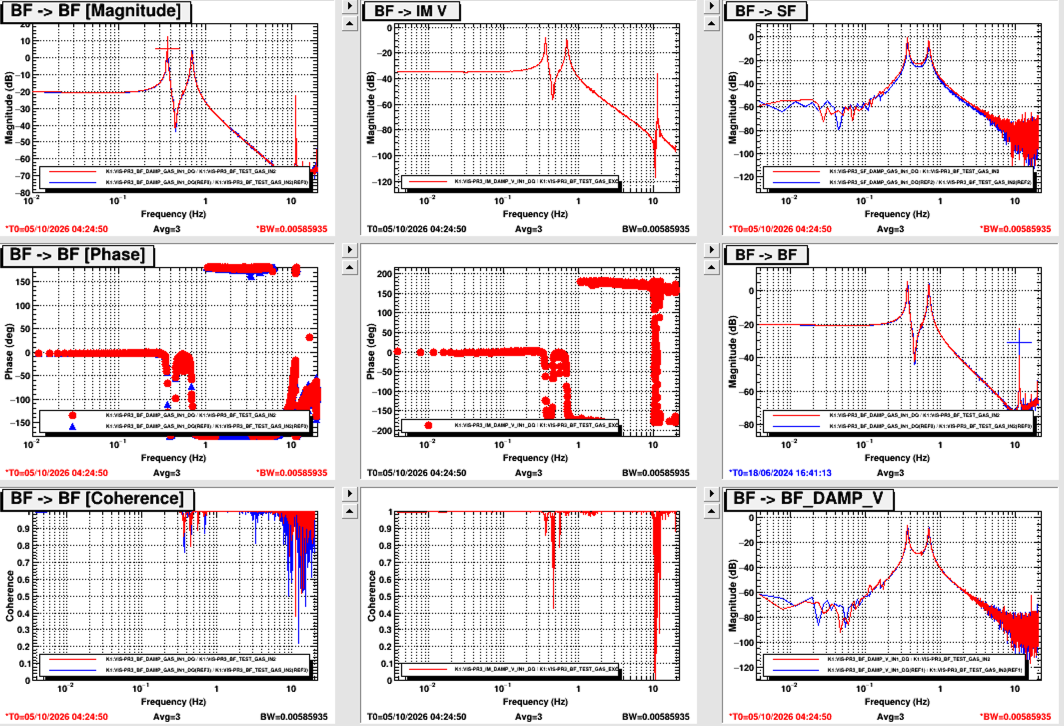
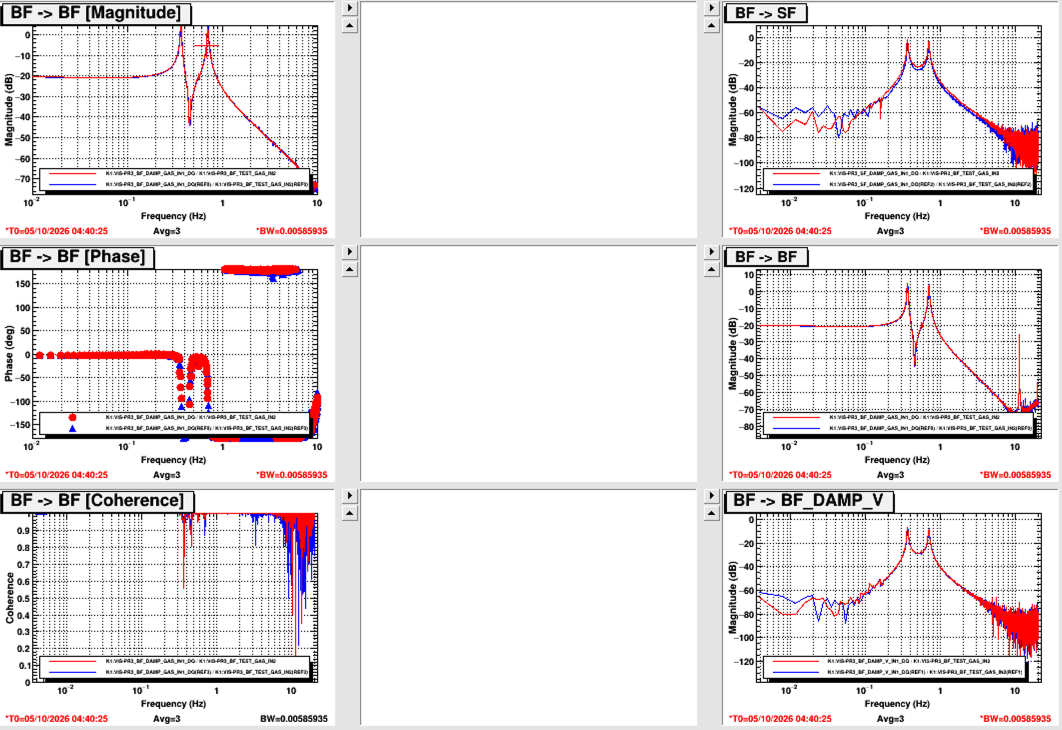
I measured the TF of the BF GAS with a swept sine. Fig. 1 shows the measured TF swept from 10Hz to 0.1Hz with an amplitude of 10000. Since the suspension was tripped while sweeping around 1Hz, the TF was remeasured from 1Hz with an amplitude of 1000 (Fig. 2). The total TF looks reasonable with high S/N. The large-amplitude actuation causes unsteady motion due to the high Q of the GAS filters. So I measured the TF of the BF and SF GAS filters with random noise at a small amplitude of 1000. The amplitude was 10000 so far. The measured TFs (Fig. 3 and 4) were consistent with the references.


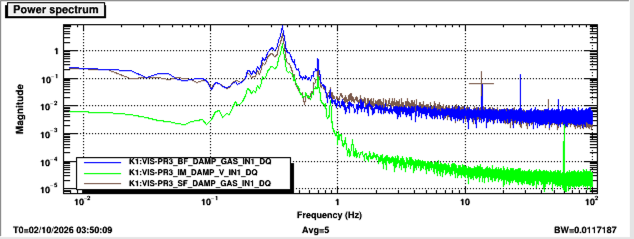
I checked the previous actuation amplitude in the health check. 10000 amplitude and a 20 Hz frequency range were used in the health check in 2024. I measured the BF GAS TF again with 10000 amplitude but a 5 Hz range. The measured TF had good coherence (Fig. 1). There is a steep peak at 11.3Hz in the TFs. Fig. 2 shows the spectra of the BF/SF GAS and the IM V. There is a steep peak at 13.6Hz in the BF/SF GAS but no peak in the IM V. The IM V sensor should show almost the same spectrum as the BF GAS one with a low noise floor. The peak in the BF GAS spectrum does not seem to be a mechanical resonance.
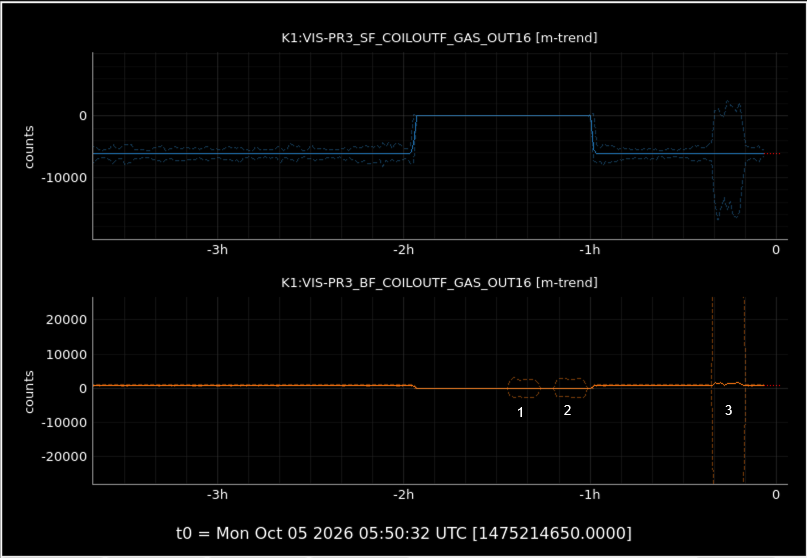
By the way, the whitening filters in the COILOUTF increase the gain by 40dB at > 10Hz. Therefore, the COILOUTF output sometimes saturates (over +/- 32768) during the 10000-counts actuation at 20Hz range.


I compared the BF GAS TFs measured in the different executions below.
- Manual execution with the whitening filter OFF in the COILOUTF (Fig. 1): Good coherence.
- Execution using the health check script. The whitening filter was OFF automatically (Fig. 2): Good coherence.
- Manual execution with the whitening filter ON in the COILOUTF (Fig. 3): Bad coherence.
- Result in the first health check on Sep. 27 (Fig. 4): Low coherence.
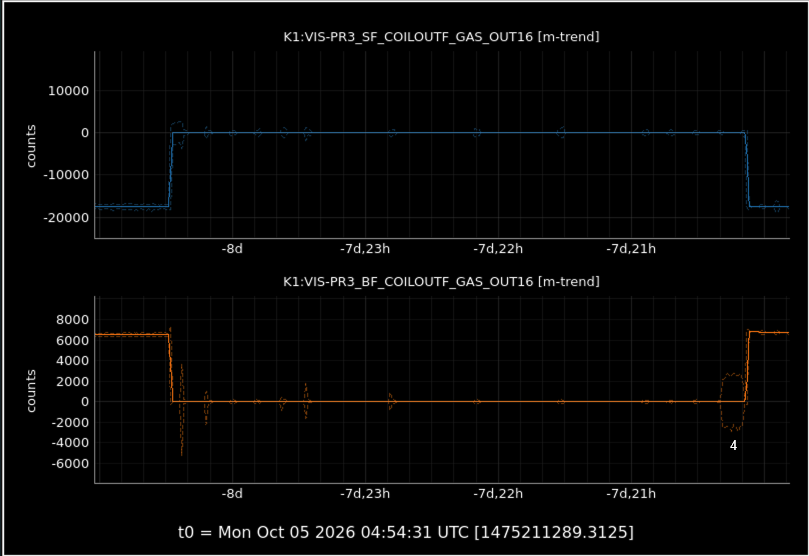
The COILOUTF output in the third case saturated (over +/- 32768) during the actuation (Fig. 5). The COILOUTF output in the first health check did not saturate (Fig. 6). The low coherence was not due to the saturated actuation.


The health check was performed again after solving the low-coherence problem in BF GAS. Compared with the reference, the coupling from Y to T and R in IM changed. Other TFs look healthy.