[Shimasue, Takano, Michimura]
BS transmission and reflectivity were measured to be:
Ts=51.9 +/- 0.2 for s-pol
Rs=47.7 +/- 0.2 for s-pol
Tp=77.7 +/- 0.6 for p-pol
Rp=21.8 +/- 0.2 for p-pol
BS transmission for s-pol is a bit too high, which might be because BS is not aligned (it is now in SAFE state).
We might need to measure them again once BS and ITMs are aligned.
What we did:
- Followed the procedure in klog 29275 for measuring the BS transmission.
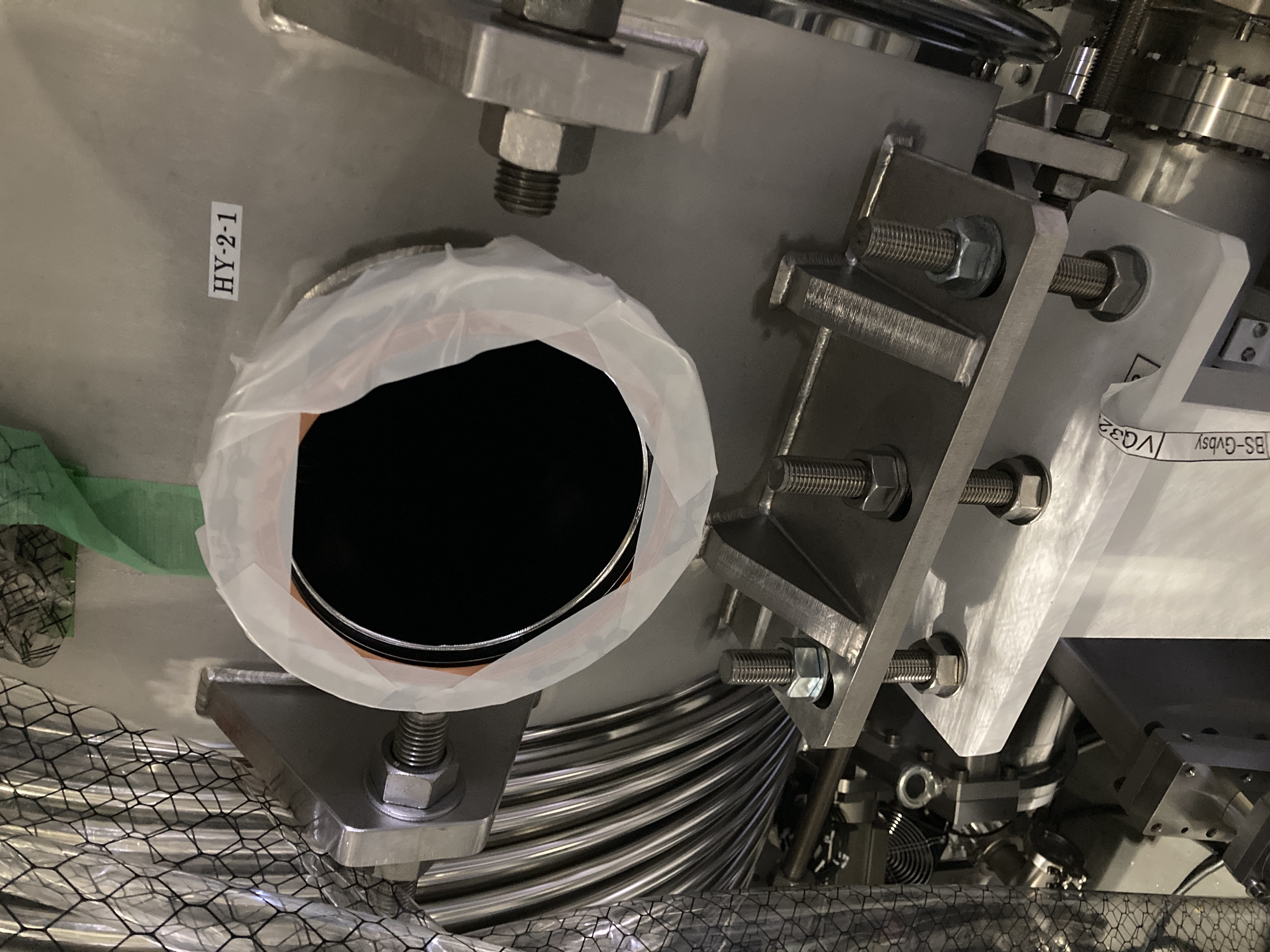
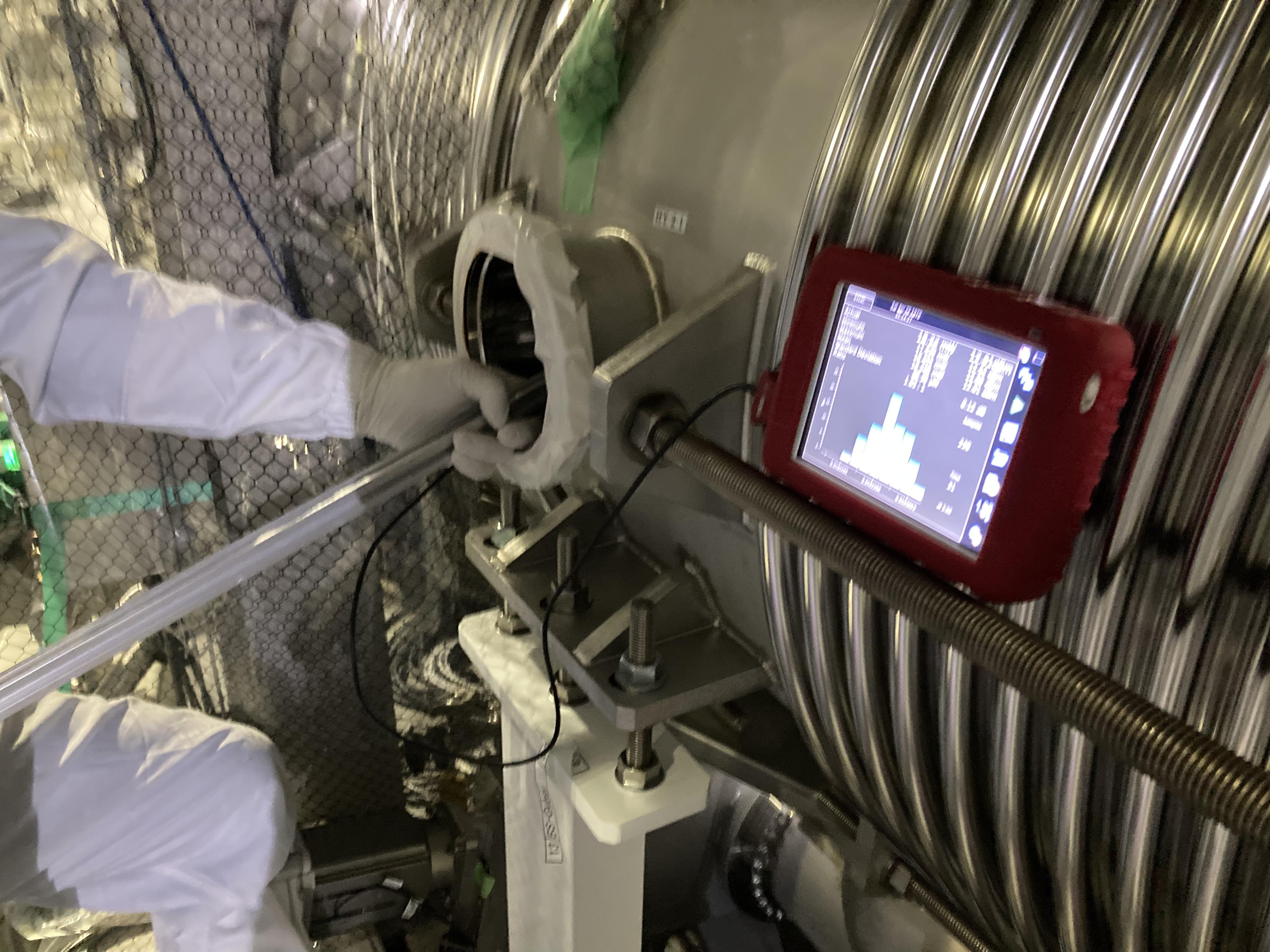
- For BS reflection, we opened an ICF203 flange labeled HY-2-1 (Attachment #1) so that we can stick the power meter (Thorlabs S310C) from the hole (Attachment #2).
Results:
- The table below summarizes the results
| polarization | incident power | BS transmitted power | BS reflected power |
| s-pol | 38.224 +/- 0.061 mW | 19.832 +/- 0.087 mW | 18.248 +/- 0.088 mW |
| p-pol | 36.931 +/- 0.067 mW | 28.696 +/- 0.211 mW | 8.062 +/- 0.062 mW |
- By calculating T = (BS transmitted power) / (incident power) and R = (BS reflected power) / (incident power), transmission and reflectivity were estimated.
Discussions:
- We noticed that the beam reflected by BS is not going through the viewport at the gate valve. We then realized that BS is not in ALIGNED state, but in SAFE state.
- This means that the incident angle to the BS might be off by 50 mrad (~15 cm over 3.3 m distance).
- The measurent tells that AR reflectivity is small enough compared with the measurement uncertainties.
Next steps:
- Estimate the effect of incident angle from the wavelength dependence from the design.
- Re-do the measurements with BS and ITMs aligned.